
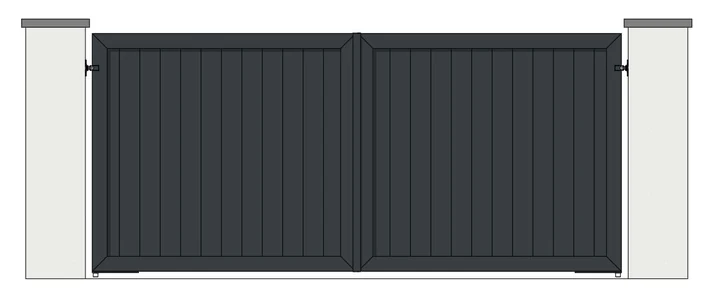
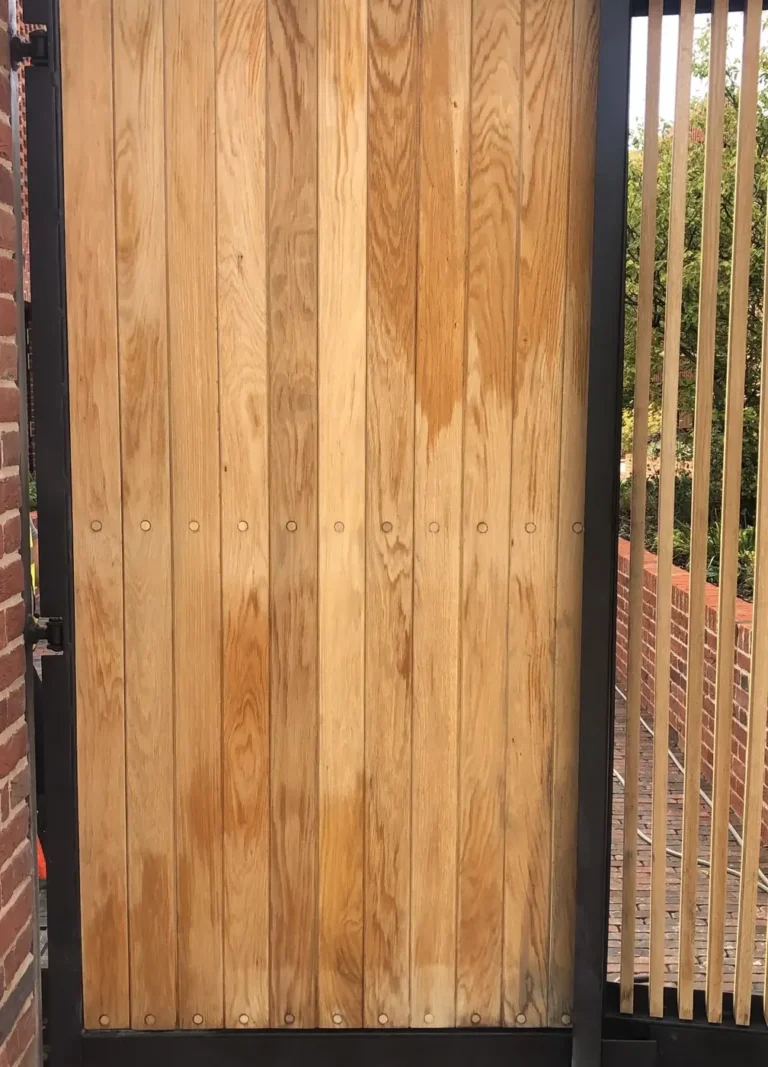
Fully boarded vertical
150mm vertical boards, fully boarded.
Model MV-150Electric gates that suit your property and open as you arrive, for drives, yards and industrial entrances. Our team draws them, makes them in our own workshop, fits the automation, wires the controls and sets the safety devices, so the whole gate comes from one team that looks after all of it.
Free site survey. Made to measure or standard. Timber, aluminium, steel and wrought iron.
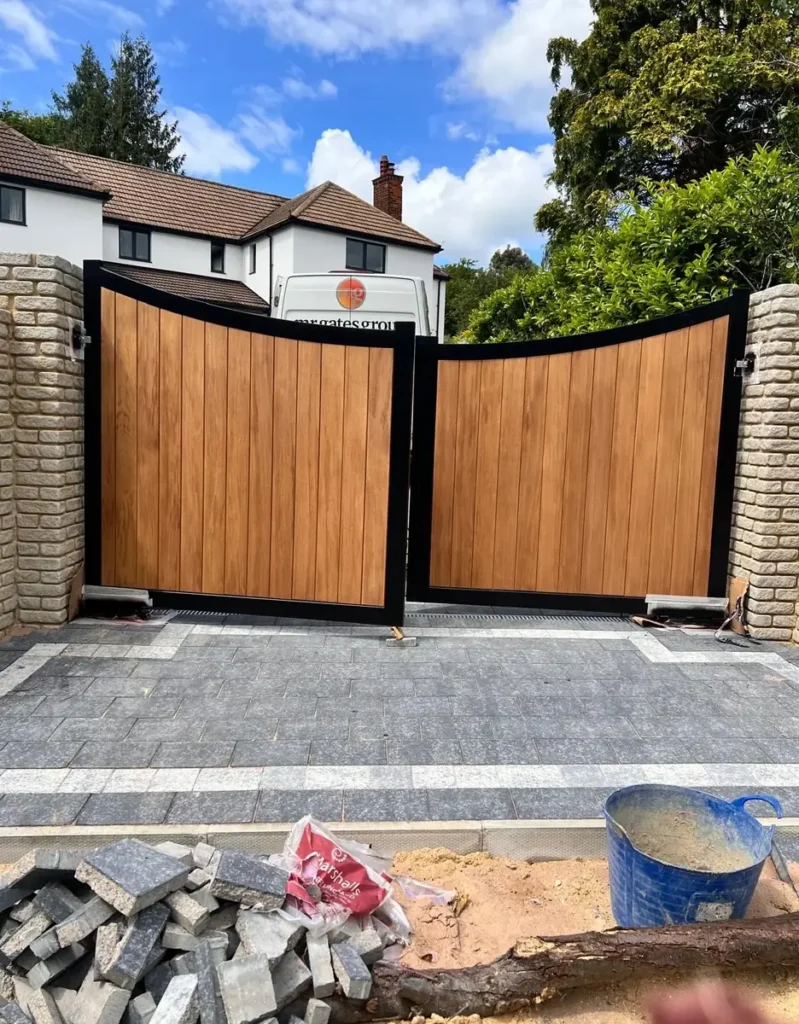
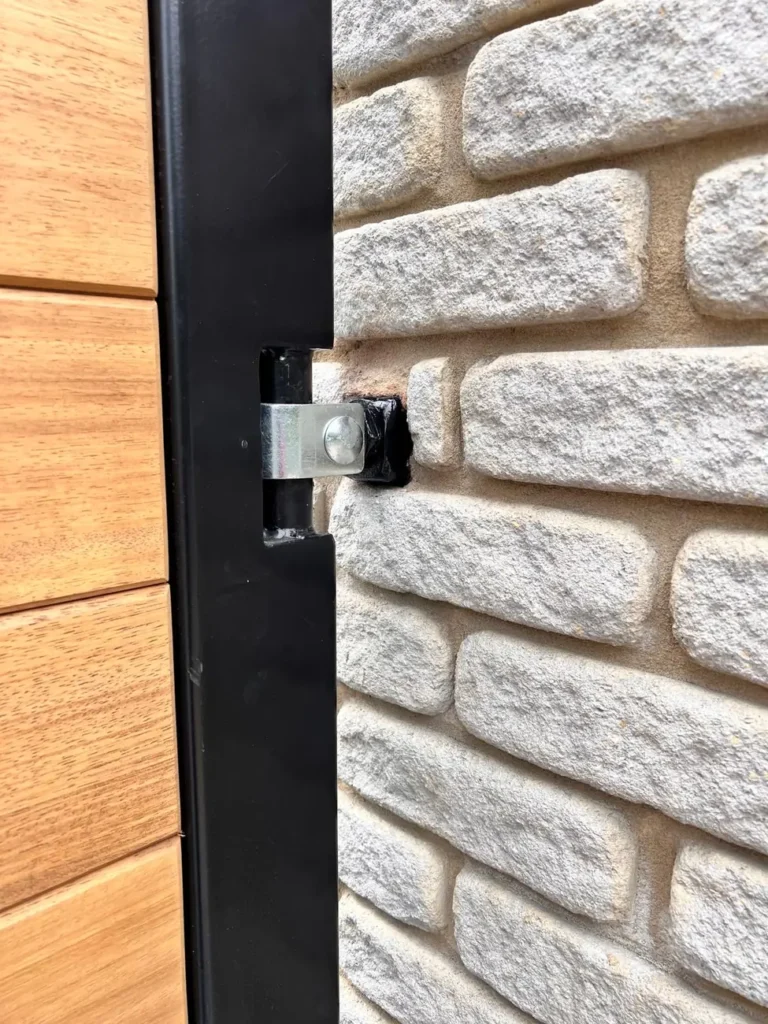
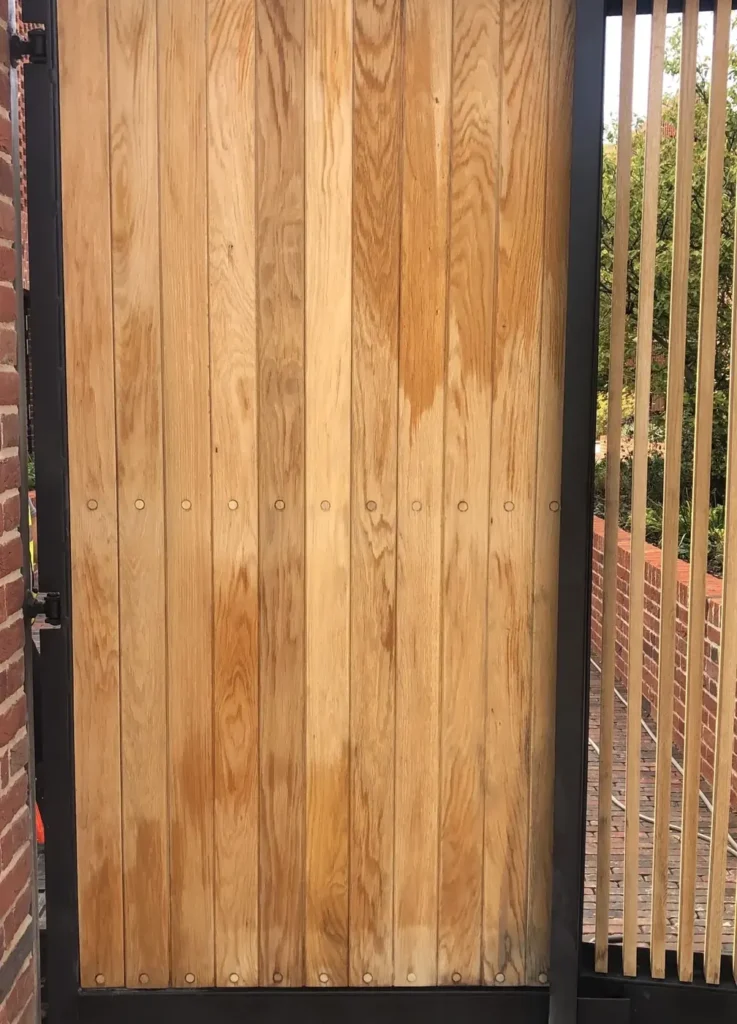
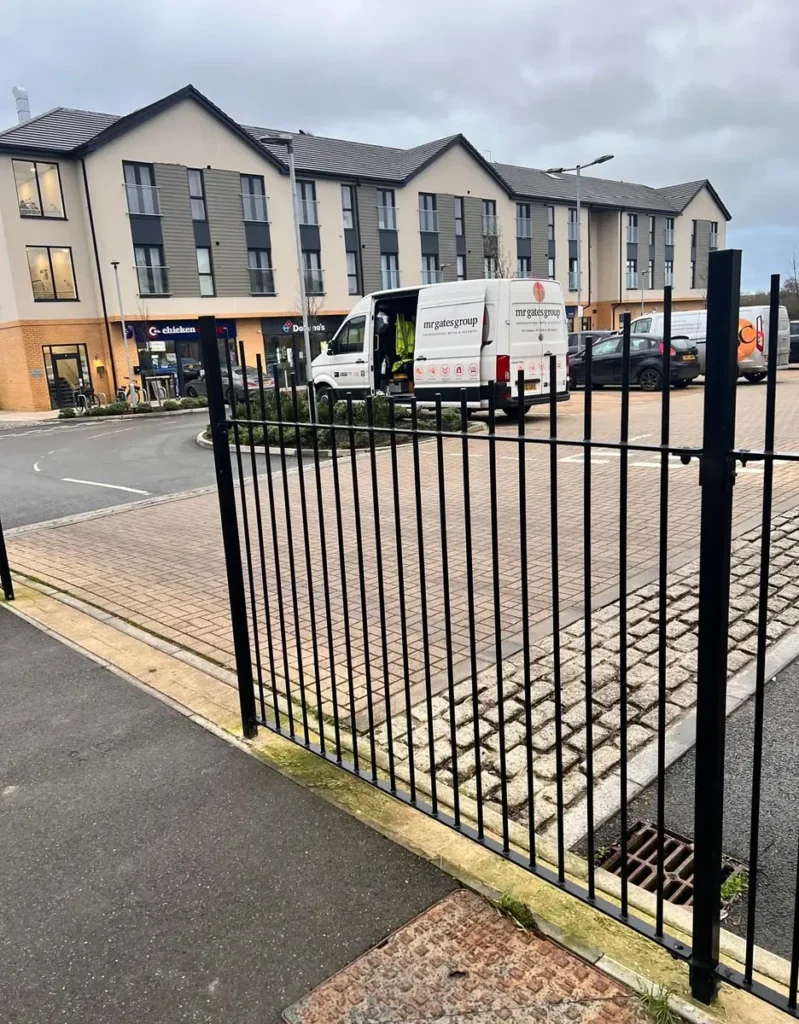
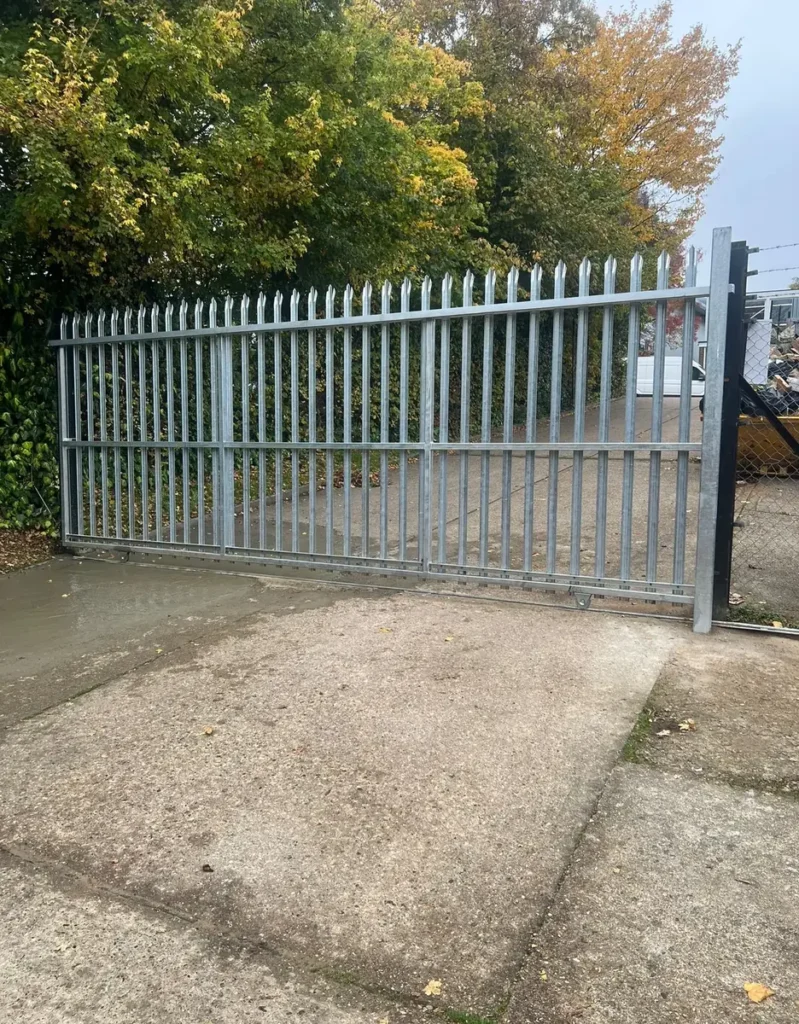
A gate across the drive changes how the front of your house looks and how safe it feels. We make it to fit the opening you've got, in a material that suits the house, and automate it so you never have to get out of the car in the rain.
An entrance that keeps working when it opens and closes hundreds of times a day, carries traffic it wasn't first specified for, and stays safe while it does. We specify for the duty cycle rather than for the picture.
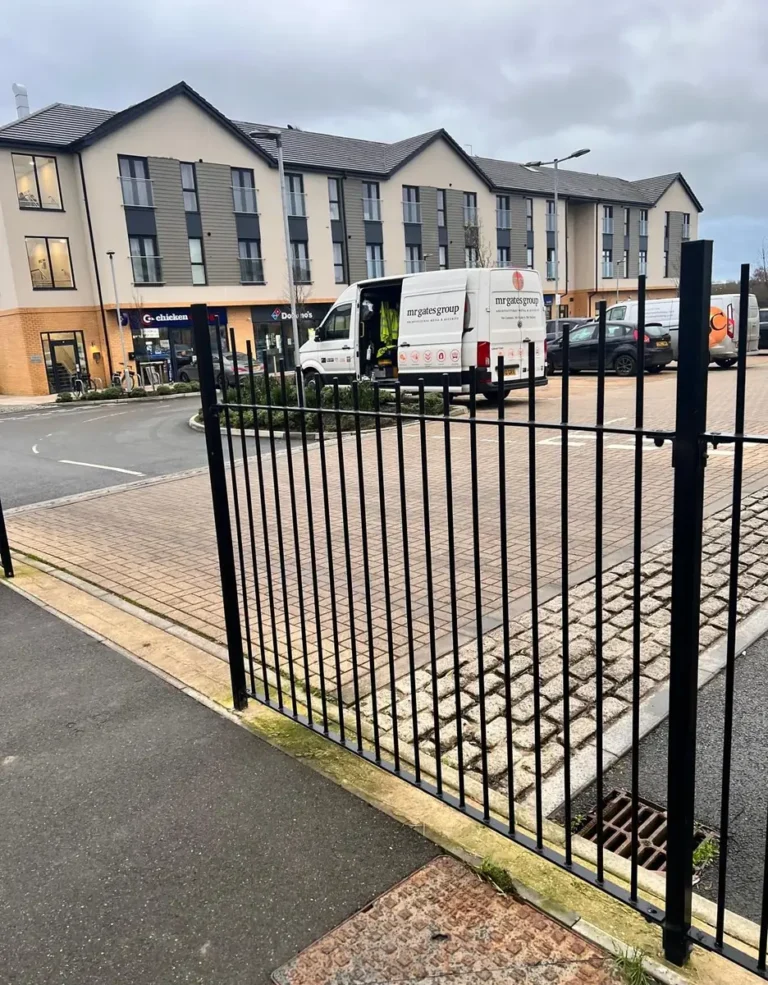
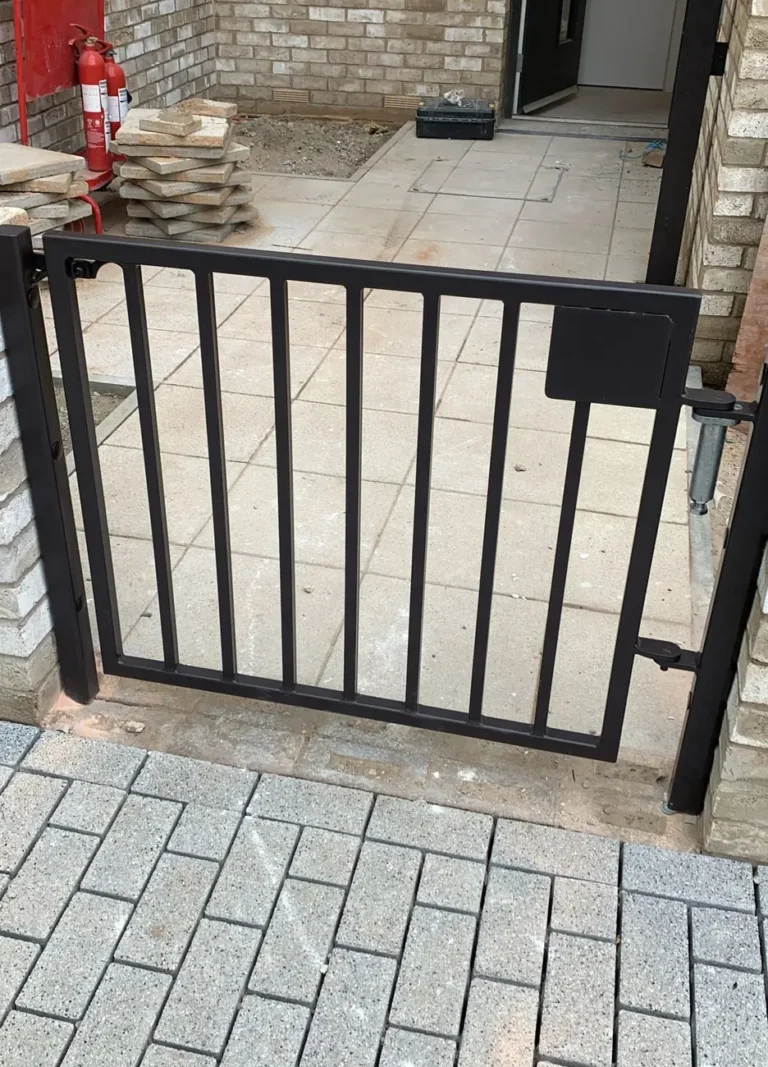
Traditional bar and scroll work, made and finished in our workshop. Just right on a period property, and the gate most people picture when they think of a driveway gate.
Light, won't rot or rust, and powder coated in the colour you choose. Popular on wide openings, where a lighter gate means the motor works less hard.
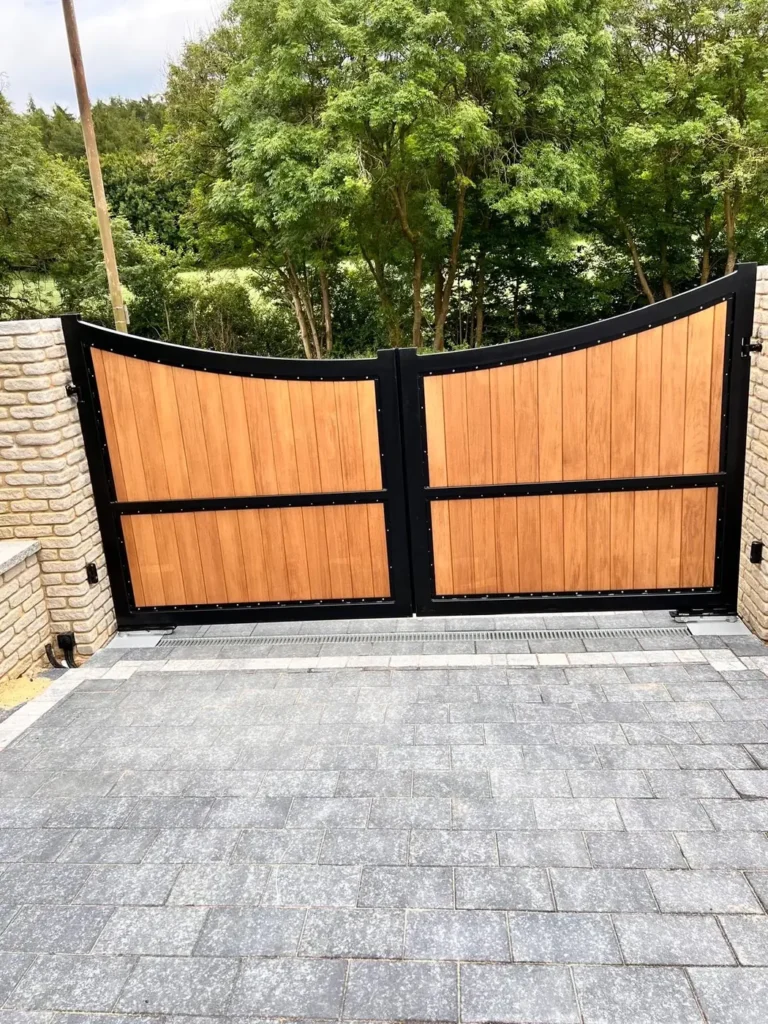
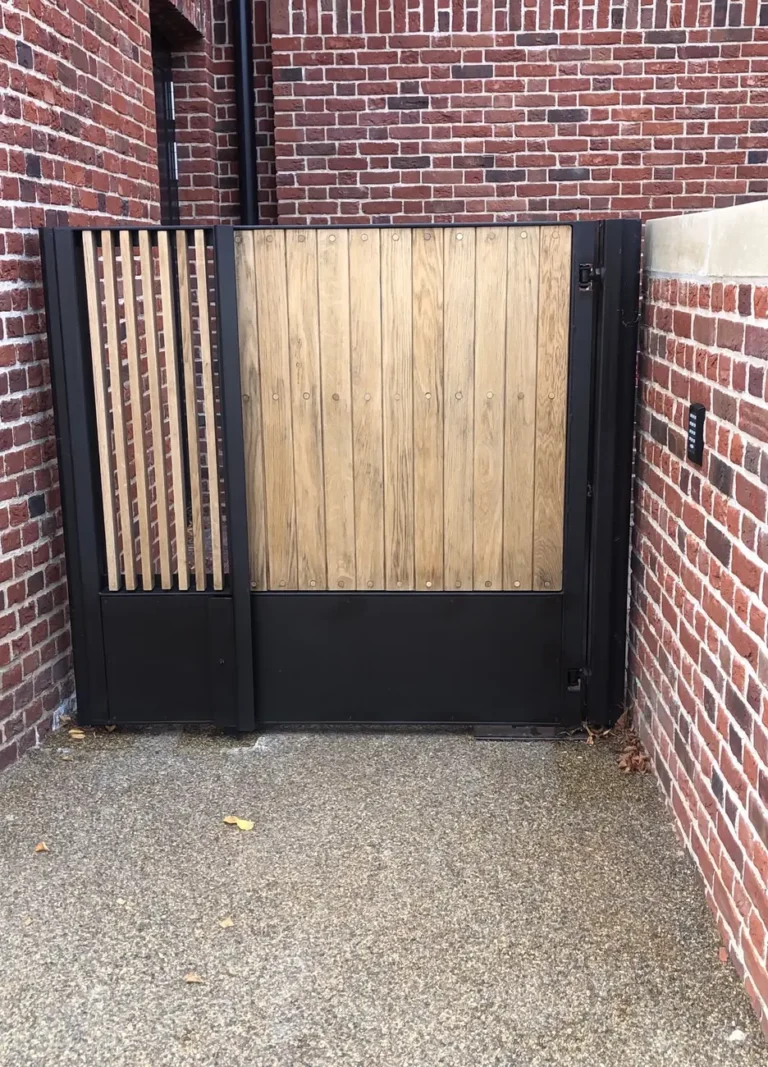
Hardwood or timber cladding on a steel frame, so you get the warm look of solid timber with a frame that stays square.
One or two leaves swinging into the property. The simplest choice where there's room behind the gate and the ground is reasonably level.
The gate runs sideways across the opening. Ideal on a short drive, a slope, or where a swinging leaf would catch the cars.
Each leaf folds in half as it opens, so the gate clears the opening quickly in half the space a swing gate needs.
Our aluminium gates come in 34 styles. Here are four to give you the idea, and you can see every one on the range page.
150mm vertical boards, fully boarded.
Model MV-150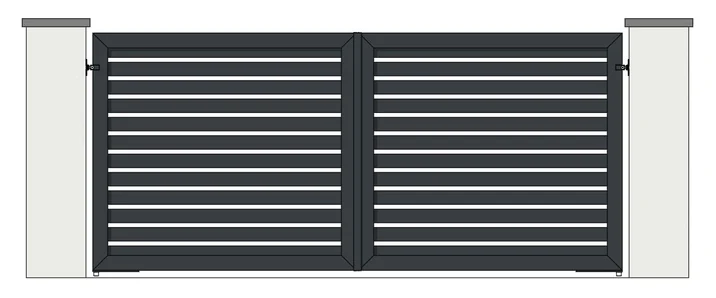
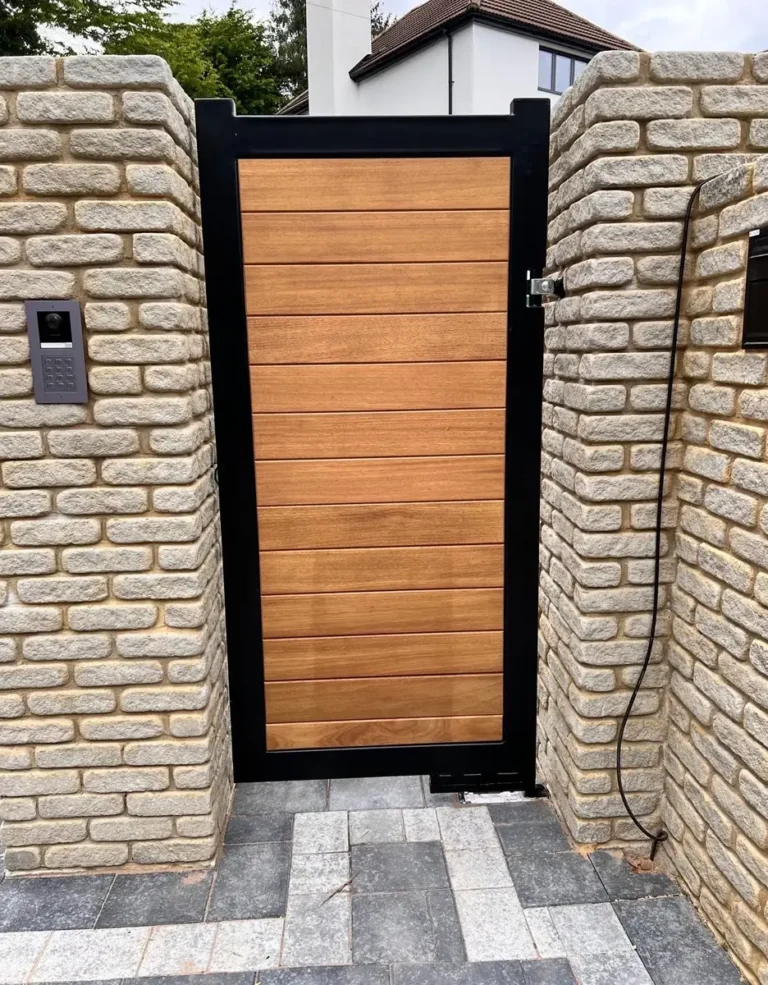
100mm horizontal boards, open boarded with 30 to 40mm gaps.
Model MHO-100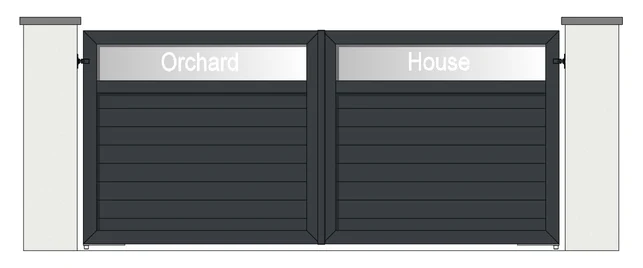
Horizontal Perspex name panel across the top, 150mm boards below.
Model MPOT-150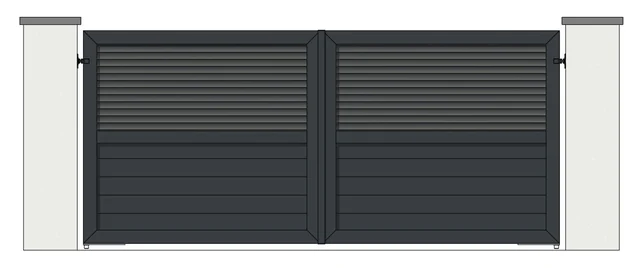
Horizontal louvre boards in the top half, 150mm boards below.
Model ML-HHSee all 34 aluminium gate styles
Carried on a counterbalanced beam, the gate never touches the ground, so there's no track to fill with grit, ice or water. Made for yards and heavy traffic.
Tracked sliding gates built for constant use, wide openings and vehicles that won't wait.
Faster opening and closing where a queue at the entrance is the problem, usually paired with automatic vehicle detection.
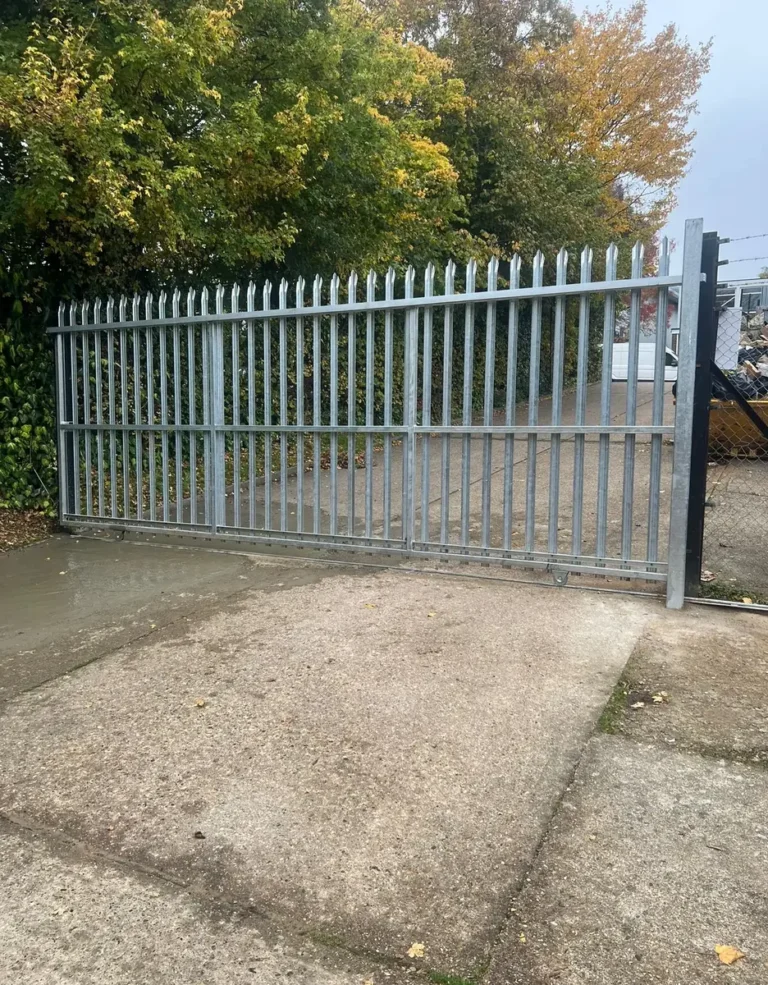
Heavier sections, hinges and motors, specified for the wind load and the duty cycle rather than for the opening alone.
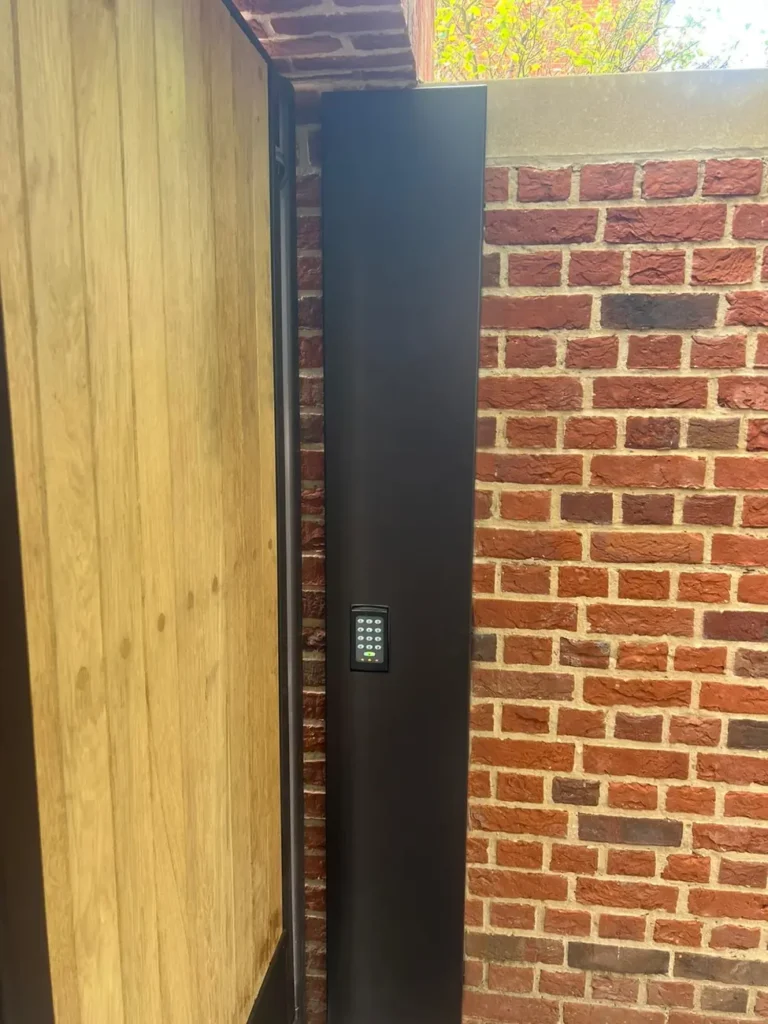
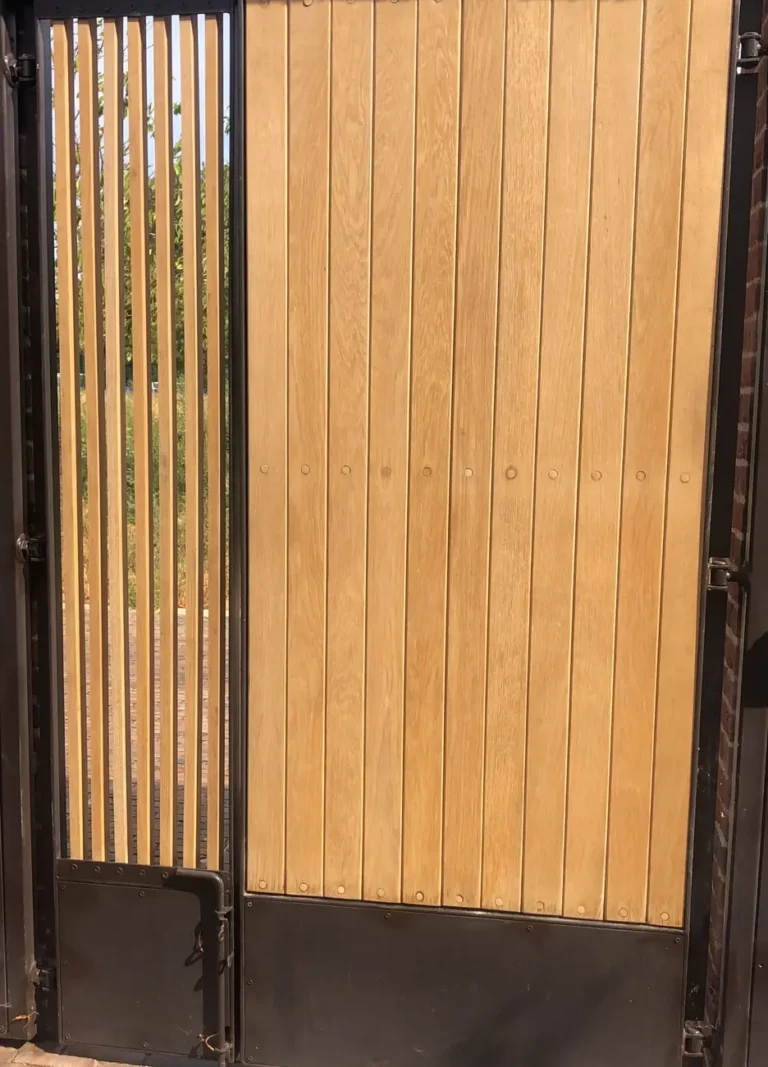
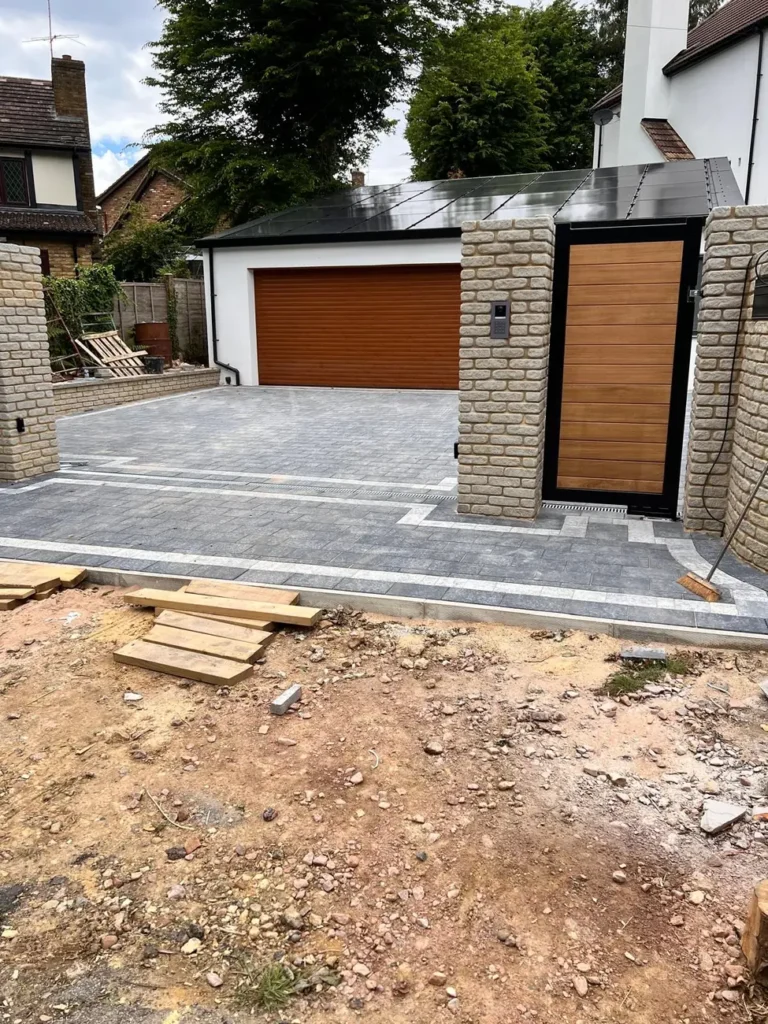
A gate at the front of your house does three things at once: it stops the drive being used as a turning circle, it makes a burglar pick a different house, and it keeps children and dogs off the road. Most people call us about one of those and end up glad of all three.
Your gate is made to the opening you have, not cut down from a stock size. We measure the gap, the fall of the ground and the piers, and draw something that suits the house. If you'd like it to match railings or a side gate, we make those too.
Most homes end up with a remote in each car, a keypad or intercom at the entrance for visitors, and an app or a fob for anyone else who needs to get in. You can add automatic opening on the way out, so leaving is as easy as coming home.
A powered gate is a machine, and it's the safety devices that make it safe rather than the gate itself. We fit photocells across the opening so the gate stops if something is in its path, safety edges where anything could be caught, and we measure the closing forces with a calibrated force tester before we hand it over. If you'd like to know more, we've written it up on the safety page: what the regulations require.
Intercoms, video entry and keypads are ideally fitted at the same time as the gate, which is tidier than adding them later and saves a second visit. Gate access control.
One of our team comes out, measures the opening, looks at where the power is, checks the ground and the fall of the drive, and talks you through what the job needs. It's free and there's no obligation at the end of it.
We don't publish prices, because a gate is made to fit and the ground it sits in changes the job more than the gate does. We're happy to tell you honestly what drives the number: what drives the cost of an automated gate.
You don't need a new gate to stop getting out of the car. If the gate you have is sound, we can usually automate it.
Whether the frame and hinges will take the extra work, whether the posts or piers are solid enough to carry a motor, whether the gate swings or slides freely by hand all the way, whether the ground is level enough, and where the nearest power supply is. A gate that drags on the ground or drops on its hinges will only drag harder once a motor is pushing it.
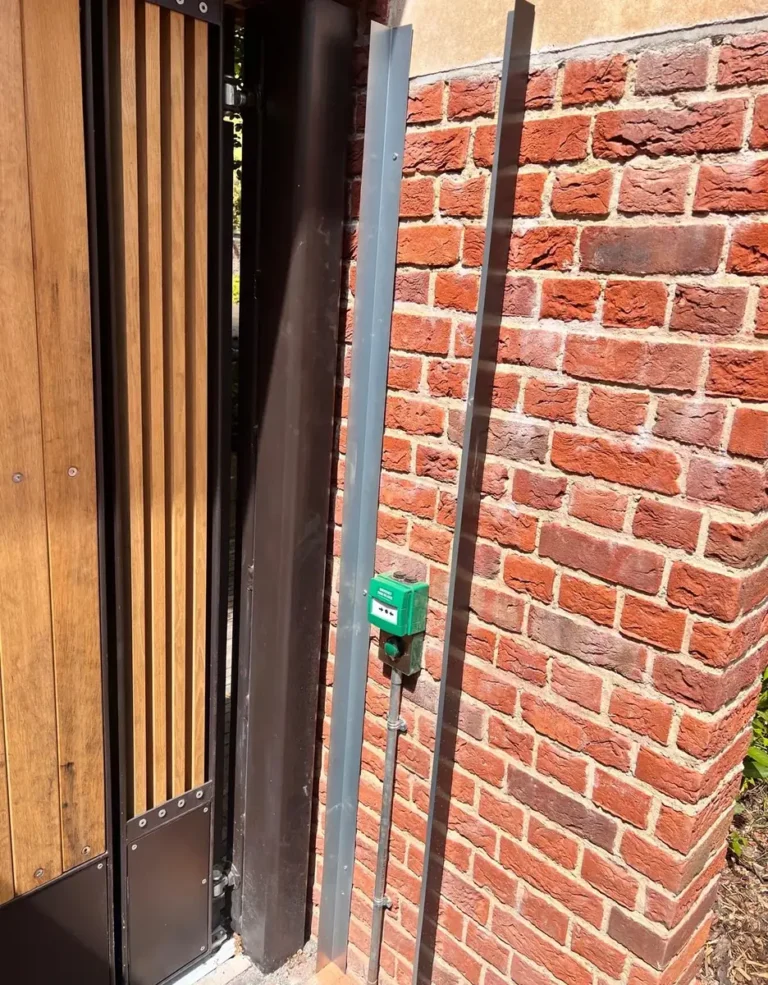
You gain motors, a control board in a weatherproof enclosure, a manual release so the gate can be opened by hand in a power cut, safety devices across the opening, and whatever you'd like to open it with. Sometimes the hinges or posts need replacing as part of the work, and we'll tell you that at the survey rather than on the day.
If your gate isn't worth automating, we'll say so at the survey. Putting a motor on a gate that is failing only breaks it faster.
A gate you can rely on, day in, day out. On a commercial site it's a piece of machinery in daily use, so what matters is the duty cycle, the wind load, the traffic volume and how the gate behaves when something goes wrong.
A gate cycling several hundred times a day needs a motor rated for it. Fitting a residential operator to a distribution yard is the most common reason a commercial gate fails early.
If vehicles stack at the entrance, the answer is usually faster gear, automatic detection on the exit loop, or a barrier alongside the gate rather than a bigger motor.
Infilled leaves catch the wind. On exposed sites this drives the section sizes, the hinge specification and sometimes the whole gate type.
Gates rarely work alone. We wire them in with barriers, bollards, intercoms, readers and site systems, so one entrance behaves as one thing. Gate access control.
Safety and the paperwork. On a commercial site the ultimate legal responsibility for an existing powered gate sits with the owner or manager, per dhf TS 013-1:2021. We commission to that standard and hand over the documentation. what the regulations require.
We've had our own manufacturing facility in Berkhamsted since 2014, with design, fabrication, finishing, project management and installation under one roof.
That's why your gate fits the opening rather than the nearest standard size, why a change or an addition years later is a phone call rather than a hunt for a discontinued product, and why we can hold a Factory Production Control certificate at all.
Our factory production control is certified to BS EN 1090-1 and BS EN 1090-2, execution class EXC2, certificate 2273-CPR-4271, valid to 21 August 2027. In plain English: the way we make load bearing and welded structural steel is audited, and the paperwork exists to prove it. Very few gate companies our size hold it.
We're not tied to one manufacturer, so we can help you choose the automation that suits your gate, your traffic and your site. We work regularly with CAME, FAAC, BFT, Nice, Beninca, DEA, Roger Technology and Locinox.
Yes. We design and manufacture in our own facility in Berkhamsted, which we've owned since 2014, and our own teams handle fabrication, finishing, project management and installation. We're a manufacturer and an engineering company as well as an installer, and our factory production control is certified to BS EN 1090-1 and BS EN 1090-2 at EXC2 under certificate 2273-CPR-4271.
Yes, as long as the gate is sound. We look at the frame, the hinges, the posts or piers, how freely the gate moves by hand, the ground and the power supply, then tell you what it needs. If the gate isn't worth automating, we'll say so at the survey rather than take the job.
Yes. We're not an approved dealer tied to one brand, and we work with CAME, FAAC, BFT, Nice, Beninca, DEA, Roger Technology and Locinox among others. That means we can recommend whatever suits your gate and site, not whatever we happen to stock.
It's usually the ground that decides, rather than taste. A swing gate needs room behind the opening for the leaves to travel and ground that is reasonably level, and it's the simpler choice where you have both. A sliding gate runs sideways across the opening instead, which suits a short drive, a slope, or anywhere a swinging leaf would catch the cars. Where there isn't enough room to swing or enough width to slide, a bi-folding gate clears the opening in about half the space a swing gate needs. Choosing the right one depends on the opening, the fall of the ground and what's behind the gate, and we'll look at all three at the free site survey and tell you which your drive will actually take.
You can open it by hand. Every powered gate we fit has a manual release, which disengages the motor so the gate moves freely, and we show you how to use it at handover rather than leaving it in the manual. It's worth trying once while nothing is wrong, so the first time isn't in the dark with the car on the wrong side of the gate. If you can't get the gate to release, or it's unsafe or blocking access, ring the emergency line on 07391 668114.
It depends on the gate and the ground, so we won't quote a lead time on a web page. What we can tell you is the order the work happens in, so you know what you're waiting for: free site survey, then a drawing and a quote, then manufacture in our own workshop in Berkhamsted, then installation, then commissioning with the closing forces measured, then handover with the documentation. Groundworks and the power supply are the two stages that most often move a date, and we look at both during the survey. Ask us for a date at the survey and you'll get a real one for your job rather than an average.
Planned maintenance and call-outs on any make, whoever installed it.
Gate servicing and repairsIntercoms, keypads, fobs and readers, wired into the gate.
Gate access controlMatching railings and side gates, made in the same workshop.
RailingsReliable entrances, with the compliance and documentation behind them.
commercial and specifier enquiriesGates for the drive, automation and repairs.
gates and repairs for your home