Bollards
Bollards keep vehicles where they should be, without a gate and without a barrier arm. Our team supplies, installs and looks after rising, telescopic, removable and fixed bollards on car parks, service yards, pedestrian areas and private drives, and we'll help you choose the right one.
Made in our own workshop where the job calls for it. Free site survey.
The bollards we install
Rising and automatic bollards
Powered bollards that drop into the ground to let a vehicle through and rise again behind it. Controlled from a fob, a keypad, an intercom or your site's own access system.
Telescopic bollards
Raised and lowered by hand and locked in position. No power, no controls, and nothing to go wrong electrically.
Removable bollards
Lift out of a ground socket entirely and lock back in. Handy where the opening needs to be completely clear some of the time.
Fixed bollards
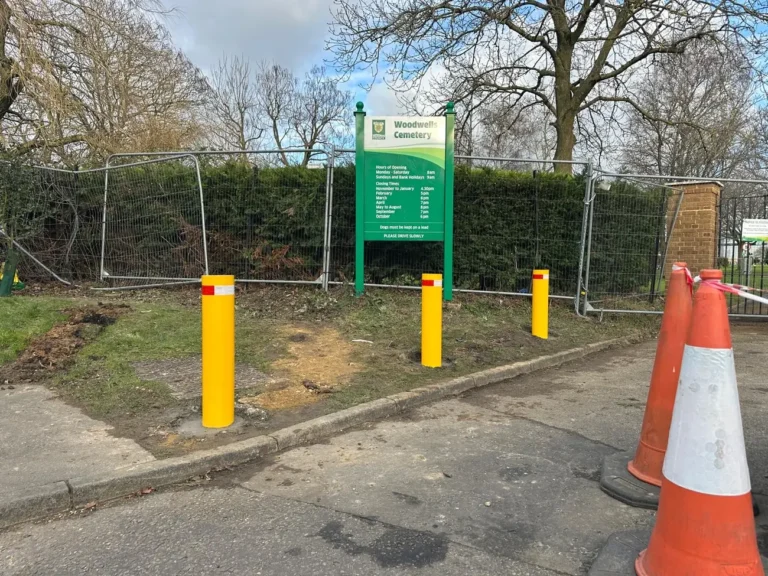
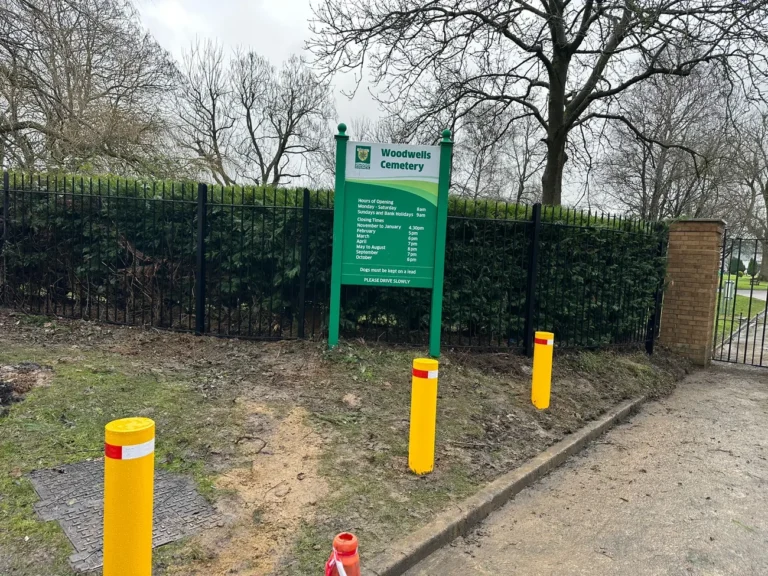
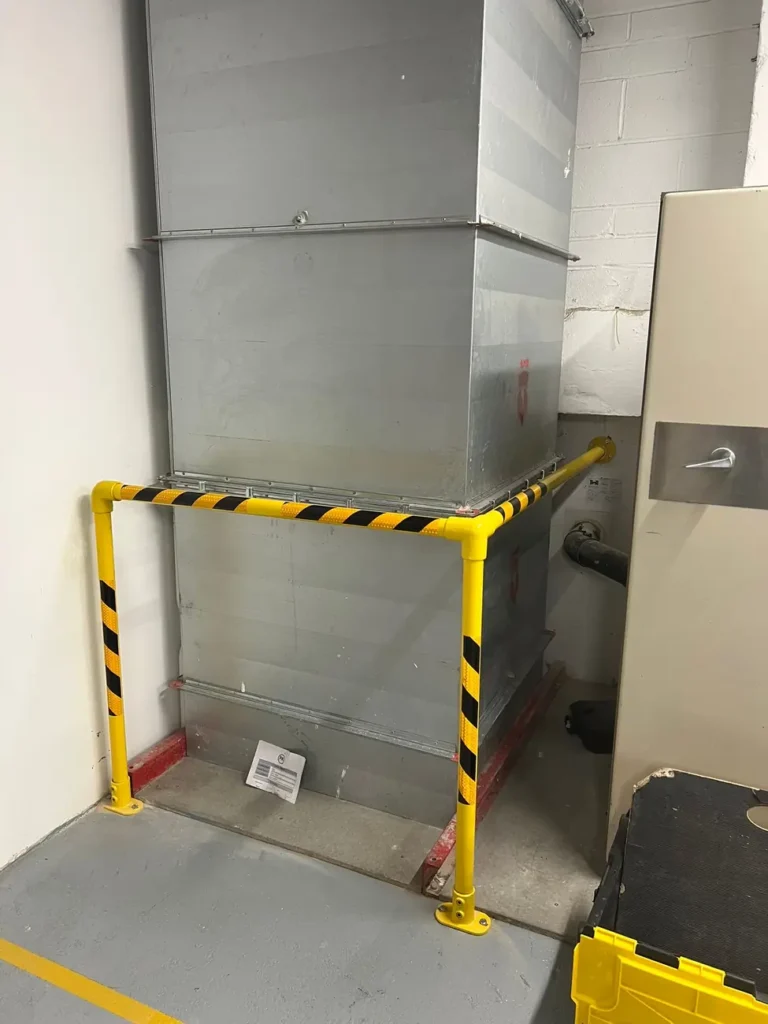
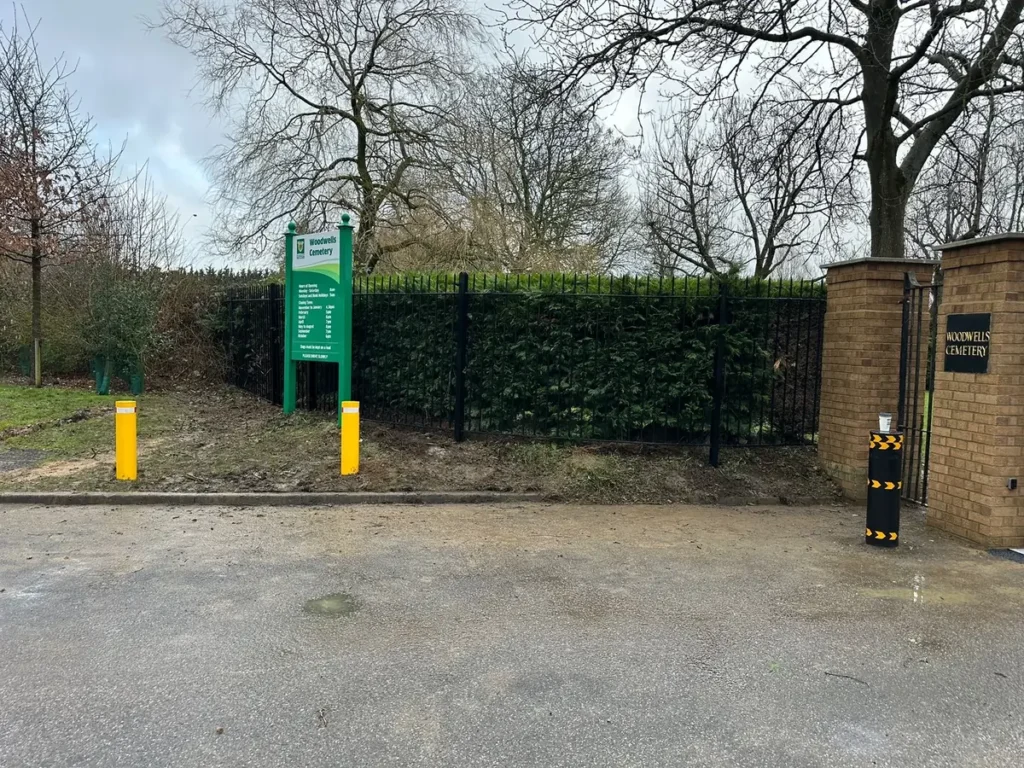
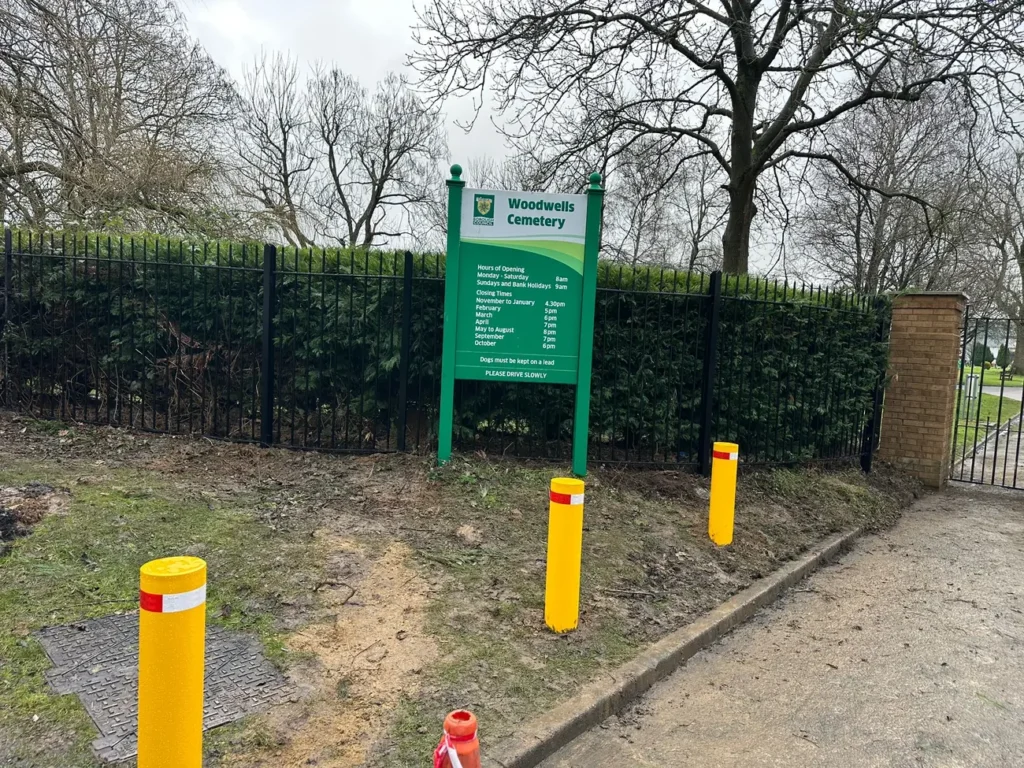
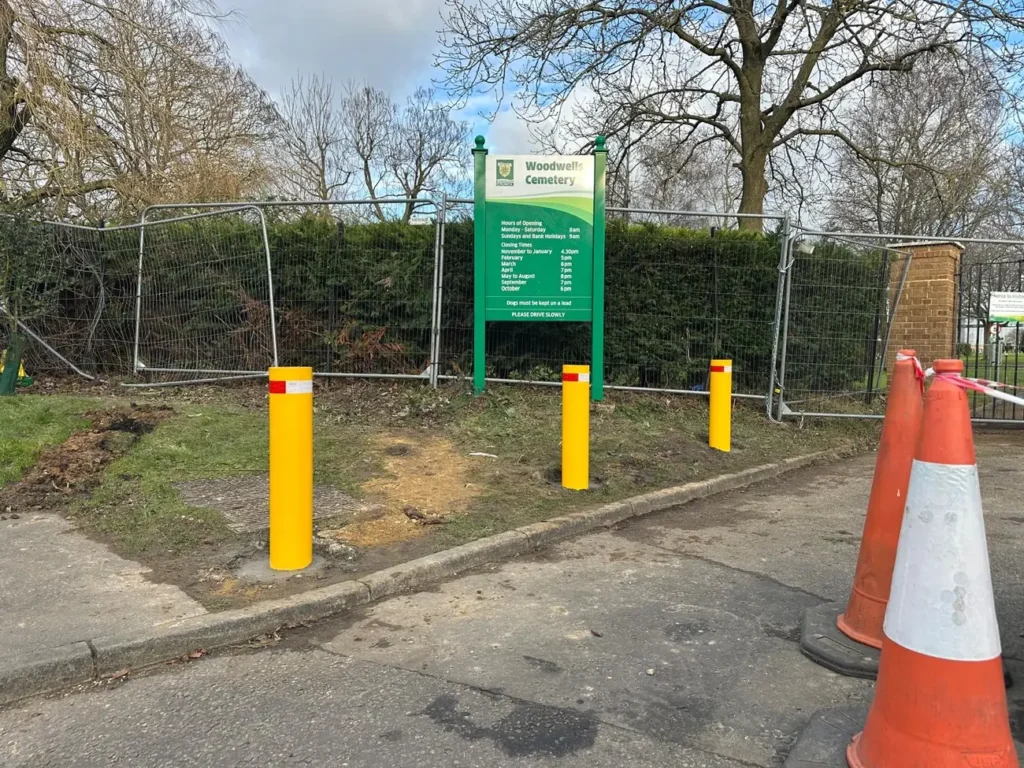
Set permanently in the ground to protect a building line, a doorway, a shopfront or a piece of plant.
Stainless steel bollards
For entrances that are on show. Brushed stainless sleeves over a steel core, in the diameters and heights your site needs.
Illuminated bollards
LED banded bollards, so they're easy to see at night and in poor weather.
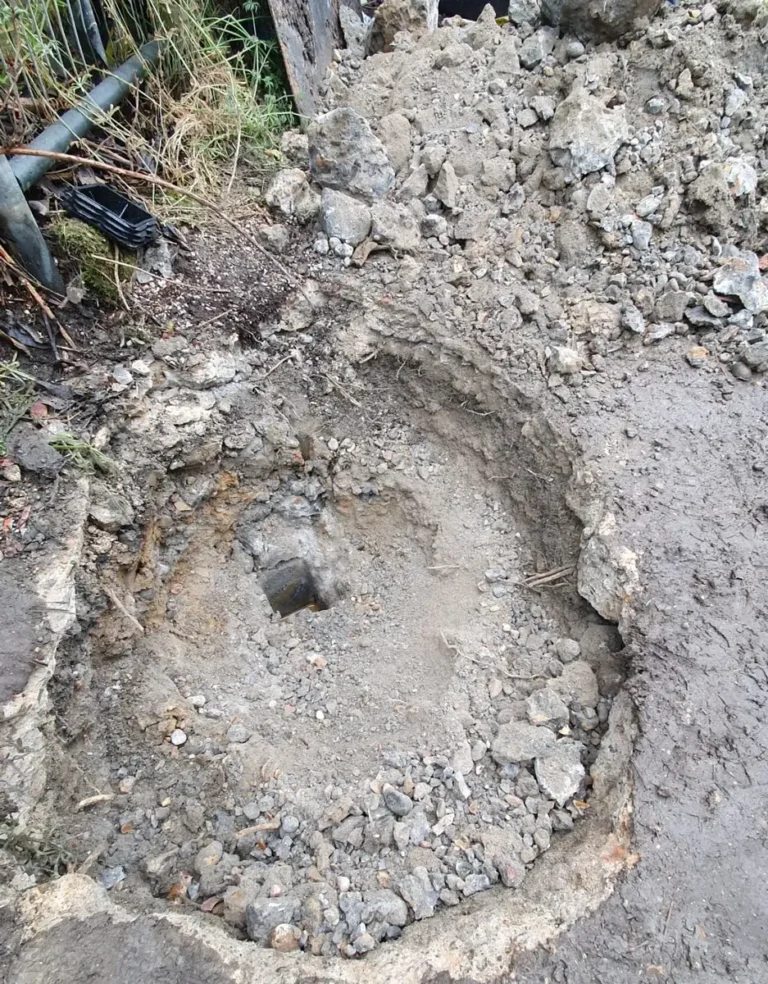
Groundworks and protection
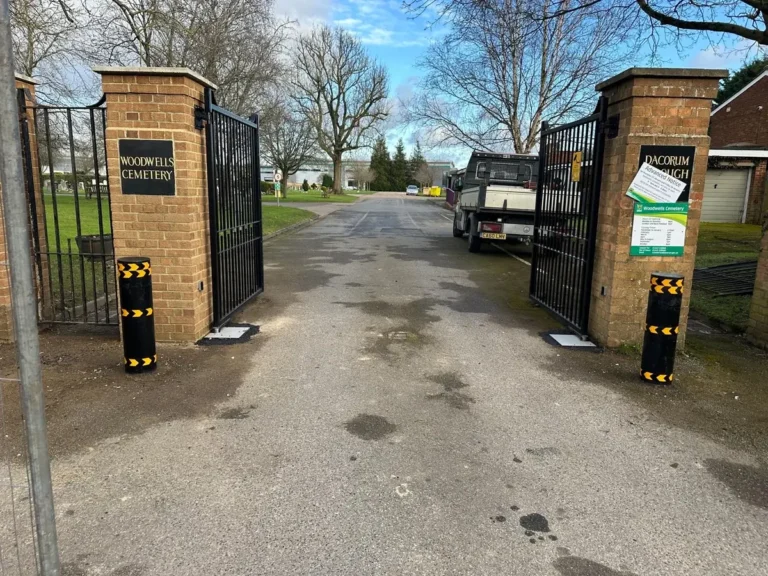
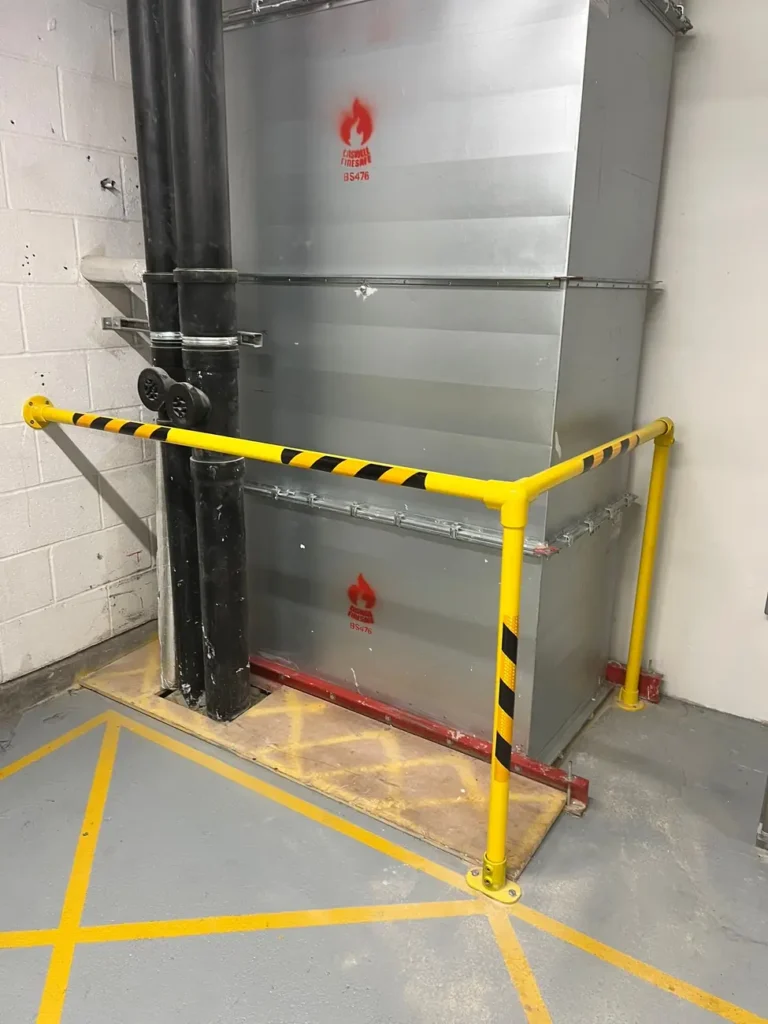
Where bollards do the job better than a gate
- Car parks. Reserving bays, closing a section off out of hours, or stopping the car park being used as a rat run, without putting an arm across the entrance.
- Service yards. Keeping delivery traffic on the route it's meant to use, and everything else off it.
- Pedestrian zones and shopfronts. Keeping people and vehicles apart, and protecting the building line at the same time.
- Sites with controlled access. Bollards wired into the same access control as the gates and barriers, so one credential works across the whole entrance. Gate access control.
- Hostile vehicle mitigation. Where a site's risk assessment calls for protection against vehicle impact, we can supply and install to that specification. The specification comes from the assessment rather than from us.
Also relevant: public sector and local authority.
Stopping other people parking on your drive
It's the most common reason homeowners call us about bollards, and it's a bigger problem than people outside a city expect. A driveway post or bollard is the simplest fix there is: no gate, no motor, and no planning debate with the neighbours about a five foot pair of gates. Just your drive, kept for you.
What people use them for
- Stopping other people parking across or on a private drive.
- Protecting the entrance itself, the pillars, the wall or the hedge from being clipped.
- Closing off a shared or unadopted drive so only the people who should use it can.
- Protecting a garage door, a corner or part of the front garden from turning vehicles.
Which type suits your house
- Telescopic posts stay in the ground and are raised by hand when you want them. Nothing to store, and nothing to trip over when they're down.
- Removable posts lift out completely and lock away, which suits a drive that's open most of the time.
- Rising bollards are powered, and worth it if you use the drive constantly or want to operate it from the car.
What installing one involves
More than most people expect, and it's the part worth doing properly. A telescopic or rising post needs a hole and a chamber set in concrete, deep enough to take the sleeve and the mechanism, with drainage so it doesn't fill with water and freeze. Rising bollards need a power supply and a duct run for the control cable. We do the groundworks ourselves rather than subcontracting them, which is why our bollards tend to keep working years later.
Free site survey
We'll come and look at your drive, the ground and where the power is, and talk you through the options before we quote anything.
Bollards we didn't install
We're happy to service and repair bollards on any make, including ones we didn't fit. Rising bollards in particular fail for reasons that have nothing to do with the bollard: a flooded chamber, a duct filled with silt, or a control cable cut by someone else's groundworks.
We make them and we dig them in
Where a bollard needs to be made to measure, we make it in our own facility in Berkhamsted rather than ordering the nearest standard size. Our factory production control for load bearing and welded structural steel is certified to BS EN 1090-1 and BS EN 1090-2 at execution class EXC2, certificate 2273-CPR-4271.
The part most people never see is the part that decides whether a bollard still works in five years: the chamber, the concrete, the drainage and the ducting. That's why we do it ourselves.
Bollards or a barrier?
A bollard controls a specific point and can be walked past. A barrier closes a whole lane in one movement, and it's usually what a busy vehicle entrance wants. Plenty of sites end up with both, wired to the same access control, and we'll help you work out the right mix.
Gates, barriers and bollards on one system
Wired to the same access control, so one credential works across the whole entrance.
Common questions
Can I put bollards on my driveway to stop other people parking there?
Yes, on your own land, and it's one of the most common jobs we do at a house. Most people choose a telescopic post that stays in the ground and is raised by hand, or a removable one that lifts out entirely. Both need a chamber set in concrete with proper drainage, which is what stops them seizing up after a couple of winters. We survey the drive first, and the survey is free.
What types of bollard are there, and which one do I need?
We install rising and automatic, telescopic, removable, fixed, stainless steel and illuminated bollards. Choosing the right one usually comes down to three things: how often the opening needs clearing, whether there's power nearby, and whether anyone needs to operate it from a vehicle. We'll work that out with you at the free site survey rather than guess over the phone.
Do you repair bollards you did not install?
Yes, on any make. Rising bollards most often fail because of the chamber rather than the bollard: flooding, silt or a damaged duct. We'll look at it, whoever installed it.
What groundworks does a rising bollard need?
More than most people expect, and it's the part that decides whether the bollard still works in five years. A rising bollard needs a hole and a chamber set in concrete, deep enough to take the sleeve and the mechanism, with drainage so the chamber doesn't fill with water and freeze. It also needs a power supply and a duct run for the control cable, which usually means a trench across whatever is already surfaced. The depth, the chamber and the drainage are set by the bollard and the ground it goes into, so we work them out at the free site survey rather than quoting a standard hole. We do the groundworks ourselves rather than subcontracting them, and here's why: when we're called to a failed rising bollard, it's far more often the chamber, the silt or a cut duct than the bollard itself.
Related services
Barriers
Car park barriers, road blockers and height restriction barriers.
BarriersGate access control
One credential across gates, barriers and bollards.
Gate access controlServicing and repairs
Planned maintenance and call-outs on any make.
Servicing and repairsCommercial and specifiers
Reliable entrances, with the compliance and documentation behind them.
commercial and specifier enquiriesHomeowners
Gates for the drive, automation and repairs.
gates and repairs for your homeWhere we fit them
Bollards we have installed