Gate safety and compliance
Know your gate is safe for everyone who uses it. A powered gate is a machine, and the law treats it as one. Our team carries out force testing to BS EN 12453, safety inspections and risk assessments on gates, barriers and bollards of any make, and gives you a clear written report you can hand to an insurer, an assessor or a leaseholder.
If you're responsible for a site with a powered gate on it, this page explains in plain words what that responsibility actually is, with the sources named.
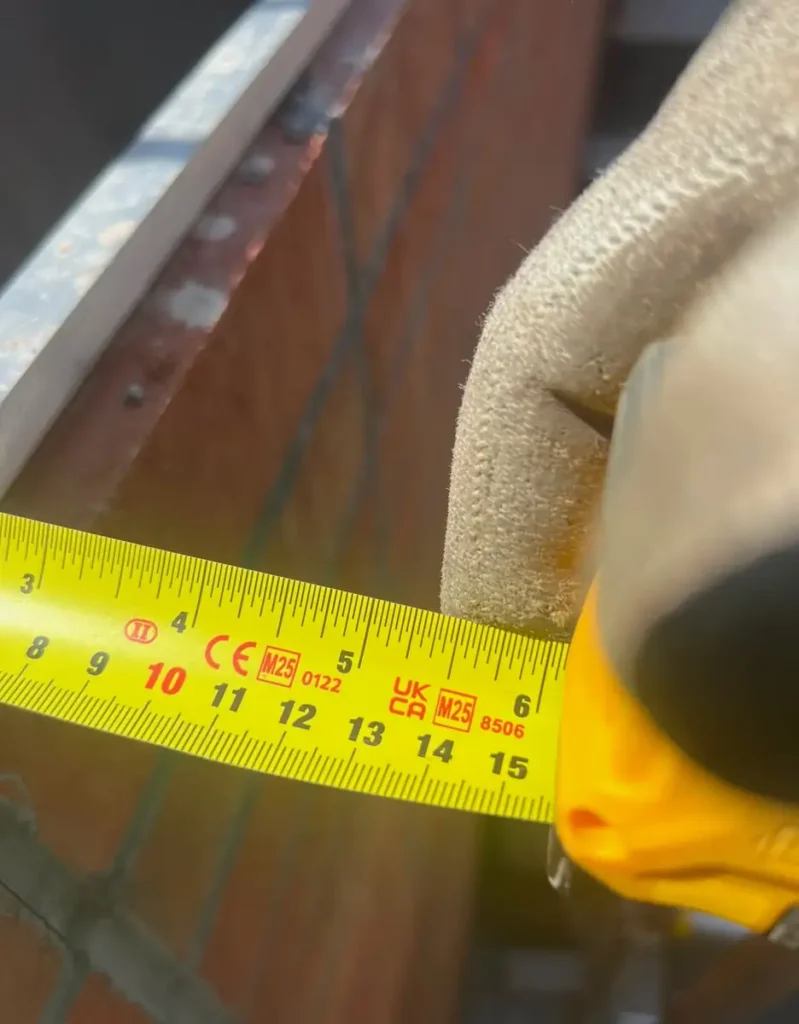
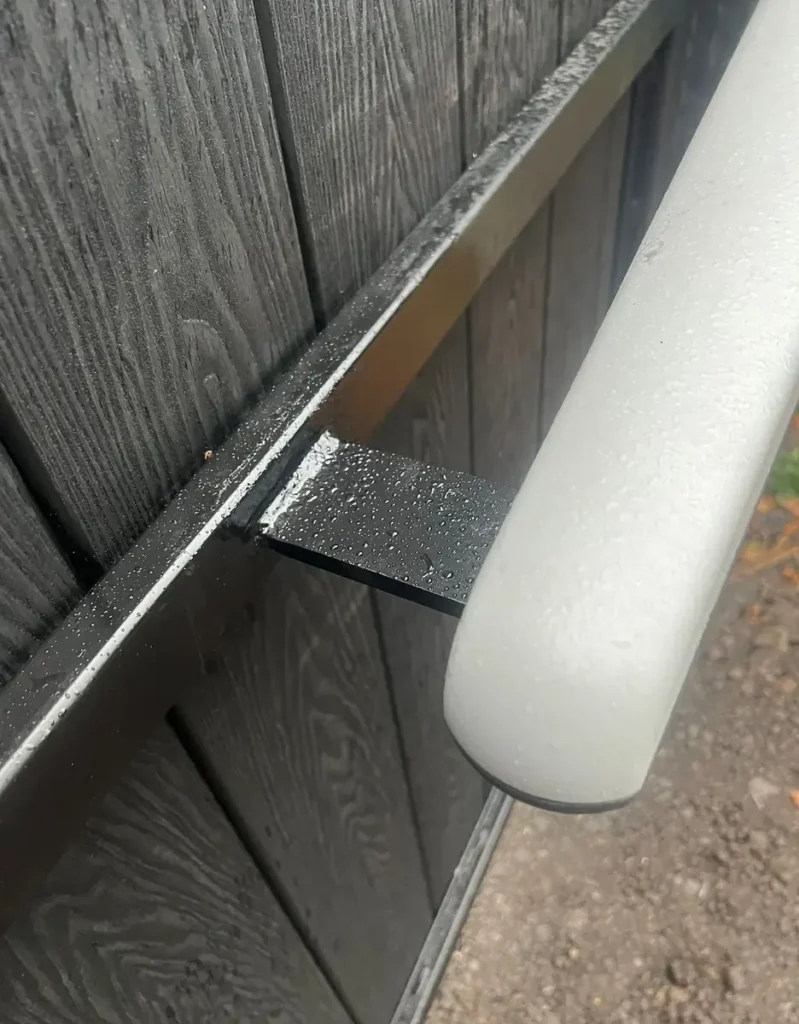
Who is responsible for a powered gate
dhf TS 013-1:2021, the trade body code of practice for the safety of powered gates and traffic barriers, states at section 14 that for existing systems under maintenance or repair, the compliance assessment is essentially the same as for a new one, "except that the ultimate legal responsibility is the owner's or manager's."
The Health and Safety Executive sets out who that means in practice on its powered gates guidance:
- Owners and occupiers of commercial premises with powered gates have duties under the Workplace (Health, Safety and Welfare) Regulations 1992.
- Landlords, and those responsible for powered gates as part of a work activity such as managing agents, have duties under Section 3 of the Health and Safety at Work etc Act 1974 for the safety of people they do not employ, including members of the public.
Put simply, the responsibility follows the site, not the installer. If you own, occupy, let or manage premises with a powered gate, barrier or bollard on them, the duty is yours, and it does not transfer to whoever fitted the gate.
What that means for a maintenance company
The same dhf section is blunt about our end of it: a maintenance company that does not leave a system in a safe condition following maintenance "can and do face criminal prosecution." It's why our engineers won't simply put a gate back into service when they find a safety critical fault.
Sources: dhf TS 013-1:2021 section 14; HSE, Powered gates: legal responsibilities.
What the standard actually says
BS EN 12453 is the safety standard for powered doors and gates. dhf TS 013-1:2021 identifies it in its foreword as the standard applied for the Supply of Machinery (Safety) Regulations 2008, and reminds readers that product standards "represent the legal minimum level of safety acceptable in legislation", not a best practice target.
Where a gate is made safe by limiting the force it can apply, which is the most common arrangement, dhf TS 013-1:2021 section 6 sets out the maximum permitted forces and how long they may last:
| Measurement | Maximum permitted |
|---|---|
| Force at or below 25 newtons | May exist indefinitely |
| Force above 25 newtons | No more than 5 seconds |
| Force above 150 newtons | No more than 0.75 seconds |
| Crush, shear and draw-in hazards | 400 newtons |
| Impact-only hazards, where a leaf moves horizontally outside a crush, shear or draw-in zone | 1400 newtons |
The alternatives to limiting force are hold-to-run control, where the gate only moves while somebody is holding a button and watching it, and non-contact presence detection such as photocells and laser scanners. Most sites end up with a combination, and we'll talk you through what yours has.
How the test is done
dhf TS 013-1:2021 section 6.5 requires the test to be made "with an annually calibrated instrument that complies with EN 12453 or EN 12445", at defined measurement points on the gate, with the result re-tested and averaged where it comes close to the permitted maximum.
Sources: dhf TS 013-1:2021 foreword and sections 6 and 6.5.
Commissioning it once is not the same as keeping it safe
This is the part most sites miss, and it's where we can help most. A gate that passed on the day it was commissioned is not necessarily a gate that passes now. Hinges wear, gates drop, photocells get knocked out of alignment, safety edges get damaged, and somebody adjusts a setting to stop the gate stalling in cold weather.
dhf TS 013-1:2021 section 6.5 states that force testing is necessary on any system using force limitation: as part of commissioning new systems, when adjustments are made that could alter force, and as part of regular planned maintenance.
That's the whole case for putting safety testing inside a planned schedule rather than treating it as a certificate you got once. HSE's guidance makes the same point from the other direction: where force limitation is the primary means of safety, objective force testing is required to be sure the system as delivered is within safe limits.
Force testing, inspection and risk assessment
We're happy to test and inspect gates, barriers and bollards of any make, whether we installed them or not. It's carried out as billable work.
Force testing
Measured at the points the code of practice sets out, with a calibrated instrument, and recorded as figures rather than an opinion.
Safety inspection
The safety devices, the control system, the structure, the fixings, the manual release and the residual hazards a risk assessment has to cover.
Risk assessment
What could go wrong at this gate, on this site, with these users, and what controls are in place.
A written report
What we measured, what passed, what didn't, and what needs to happen next. Written clearly, so you can hand it to somebody else.
Putting it right
Where the test fails, we quote the work that would make it pass, so you're never left with just a report and a problem.
One thing we do not claim
We offer force testing as a service. We do not claim to hold a force testing certification, because we hold no certificate for it. The four credentials we do hold are documented and listed on the accreditations page.
Is the gate at my house safe?
The legal position, stated accurately. HSE's guidance says that health and safety law does not apply to owners of powered gates at privately owned homes, but that it is strongly recommended they are checked regularly. So this is not a legal obligation on a homeowner in the way it is on a business, and anybody telling you otherwise is overstating it. It is still a machine on your drive, and the reason the standards exist is that powered gates have killed children.
What a safe gate does when something is in its path
It stops, and usually reverses. That happens because of the devices fitted to it rather than because of the gate:
- Photocells across the opening, which stop the gate if the beam is broken.
- Safety edges on the leading edge and anywhere something could be trapped, which stop the gate on contact rather than after it.
- Limited closing force, measured with a force tester so it is a number rather than a guess.
- A manual release, so the gate can be opened by hand in a power cut.
What to look at on a gate you already have
- Do the photocells still line up, and are the lenses clean rather than green and full of cobwebs?
- Does the gate stop if you break the beam with something on the ground while it is closing? Never test it with a person, a child or a pet.
- Is there a visible safety edge, and is it damaged, split or hanging off?
- Does the gate drag, catch, or drop on its hinges? A gate that is physically labouring is a gate whose forces have changed.
- Do you know where the manual release is and how to use it?
- Are the children in the house clear that the gate is not a toy and not a climbing frame?
If any of that gives you pause, don't worry: ring us and we'll come and measure it properly.
What goes in the report, and who ends up reading it
Every visit ends with a documented job report: what our engineer found, what was done, and what the system still needs. On a compliance visit that report also carries the force readings and the condition of each safety device.
It matters because of who asks for it. An insurer after an incident. A managing agent putting a proposal to leaseholders. A main contractor auditing its supply chain. An HSE inspector. A buyer running a framework. In each case the question is the same: can you show that this gate has been assessed and maintained, and by whom.
A verbal assurance from whoever came out last is not an answer to that question. A dated report with figures on it is.
The credentials behind this
We are a full member of the dhf, company number 1268, which is the trade body whose code of practice this page cites. We also hold Constructionline Gold, registration 00322439, and SSIP via Once For All, and we carry 8m pounds public liability and 8m pounds products liability.
Company number 1268
The trade body that writes the code of practice this page cites.
Common questions
What is BS EN 12453?
It is the safety standard for powered doors and gates. dhf TS 013-1:2021 names it in its foreword as the standard applied for the Supply of Machinery (Safety) Regulations 2008, and points out that product standards represent the legal minimum level of safety acceptable in legislation rather than a best practice target. In practice it is what decides how hard a gate is allowed to push, for how long, and what has to be fitted to stop it hurting somebody.
What is gate force testing?
It is measuring, rather than estimating, the force a powered gate applies when it meets an obstruction, and how long that force lasts. dhf TS 013-1:2021 section 6.5 requires the test to be made with an annually calibrated instrument complying with EN 12453 or EN 12445, at defined points on the gate. Section 6 sets the limits: no more than 400 newtons at crush, shear and draw-in hazards, no more than 1400 newtons at impact-only hazards, with force allowed above 150 newtons for no more than 0.75 seconds and above 25 newtons for no more than 5 seconds.
Are automatic gates legally required to be tested?
There is no single UK regulation that names a testing interval, and anyone quoting one should be asked for the source. What is documented is this. Where the gate is on commercial premises, HSE places duties on owners and occupiers under the Workplace (Health, Safety and Welfare) Regulations 1992, and on landlords and managing agents under Section 3 of the Health and Safety at Work etc Act 1974. dhf TS 013-1:2021 section 6.5 states that force testing is necessary as part of commissioning, whenever adjustments are made that could alter force, and as part of regular planned maintenance. At privately owned homes, HSE says health and safety law does not apply but strongly recommends that gates are checked regularly.
Who is responsible for gate safety on a commercial site?
The owner or the manager. dhf TS 013-1:2021 states at section 14 that for existing systems under maintenance or repair the ultimate legal responsibility is the owner's or manager's, and HSE places duties on owners and occupiers of commercial premises, and on landlords and managing agents acting as part of a work activity. It does not sit with whoever originally installed the gate.
Are electric gates safe with children and pets around?
Yes, when they're properly set up and kept in good condition. A properly set up gate stops and reverses when something is in its path, because of the photocells, safety edges and force limits fitted to it rather than because of the gate itself. That protection is only as good as its current condition: photocells drift out of alignment, safety edges get damaged, and forces change as a gate wears and drops. Test the beam with an object on the ground, never with a child or an animal, and if you're unsure, we'll happily measure the forces properly.
What should I check on a gate at home?
Five quick things: whether the photocells line up and are clean, whether the gate stops when the beam is broken, whether any safety edge is damaged or hanging loose, whether the gate drags or catches anywhere in its travel, and whether you know where the manual release is. None of that replaces a measured test, but all of it is visible from the drive.
Related services
Servicing and repairs
Where force testing belongs: inside a planned schedule.
Servicing and repairsAutomated gates
Commissioned to the standard, with the documentation handed over.
Automated gatesBarriers
Car park barriers and road blockers, tested to the same code of practice.
BarriersCommercial and specifiers
Reliable entrances, with the compliance and documentation behind them.
commercial and specifier enquiriesHomeowners
Gates for the drive, automation and repairs.
gates and repairs for your homePublic sector
Councils, housing providers and estates teams.
Public sectorCross-cutting questions about cost, coverage and process live on the FAQs page.
Where we test them
Inspection and force testing