
Bi-folding speed gates
Steel gates whose leaves fold in on themselves as they open, so they clear a wide entrance quickly in far less space than a swing gate needs, with no track across the road. Made to order, delivered fully assembled, and fitted, commissioned and looked after by our own engineers.
- 3 to 8 secto open, depending on size
- About 40%less opening space than a swing gate
- Up to 10mclear drive-through opening
- 100%duty cycle motor and gearbox
Fast, and folds into a tight space
Each side of the gate is two panels hinged together. As the gate opens, the panels fold against each other and tuck in beside the tower, so they need about 40% less room behind the gate than swing gates of the same width.
- Quick. Typically more than twice as fast as a swing gate of the same size, so traffic keeps moving and the site stays secure.
- Trackless. Nothing across the road to fill with grit or ice, and nothing to trip over.
- Drive hidden in the tower. An integrated three phase motor and gearbox sit inside a strong, secure tower, along with the control gear.
- Built for busy entrances. A 100% duty cycle motor and gearbox, for sites where the gate is in use all day.
The parts of a bi-folding gate
Open the gates on the drawing to see where the leaves go. The numbers match the key.
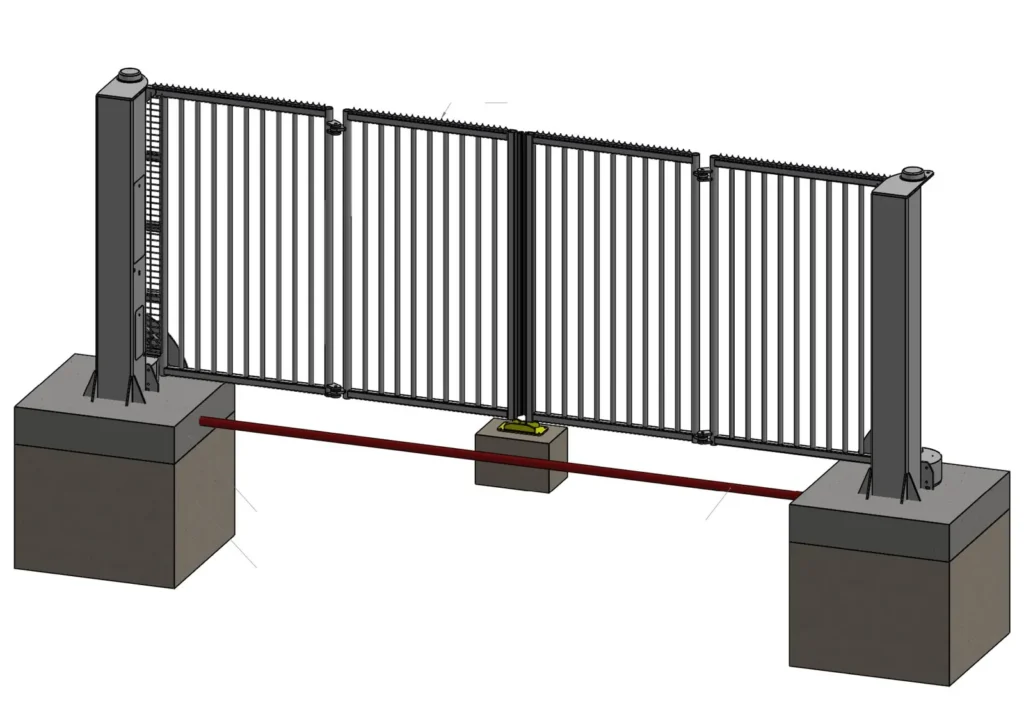
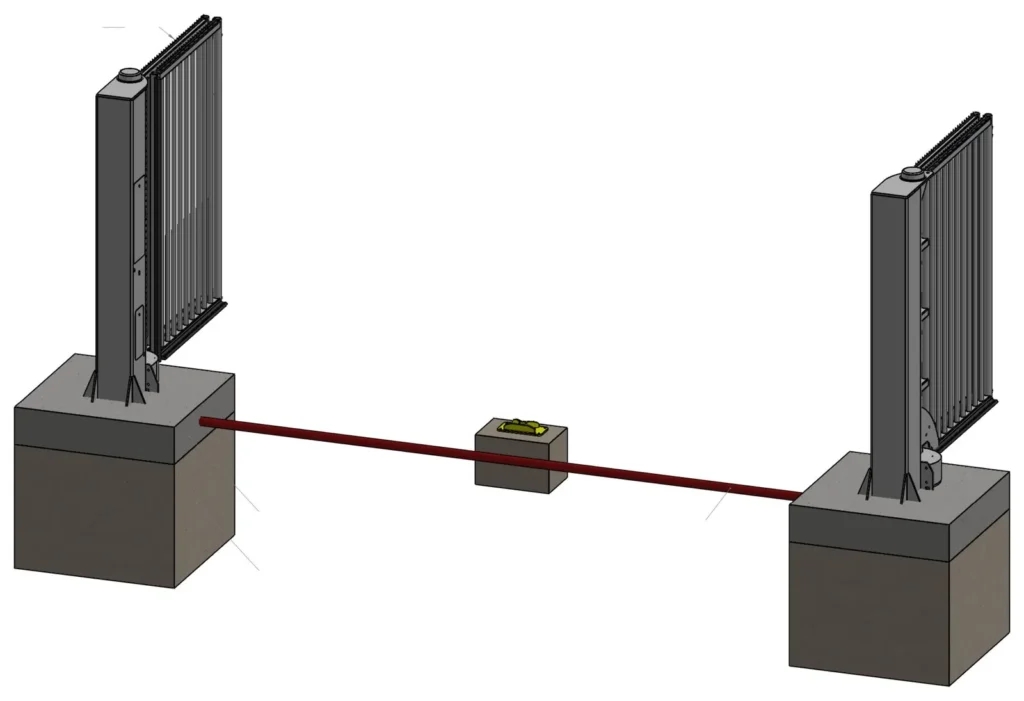
- Drive tower. The three-phase motor, gearbox and control panel sit inside each tower.
- Second tower. Each tower needs its own 230V, 10 amp supply.
- Catch shoe. On a small foundation of its own, mid-opening.
- Ducting between towers. Links the two towers for the cabling, with a draw cable left in.
- Two-pour foundation. The first pour goes in at least seven days before the gates arrive.
Made to carry your fence line through the entrance
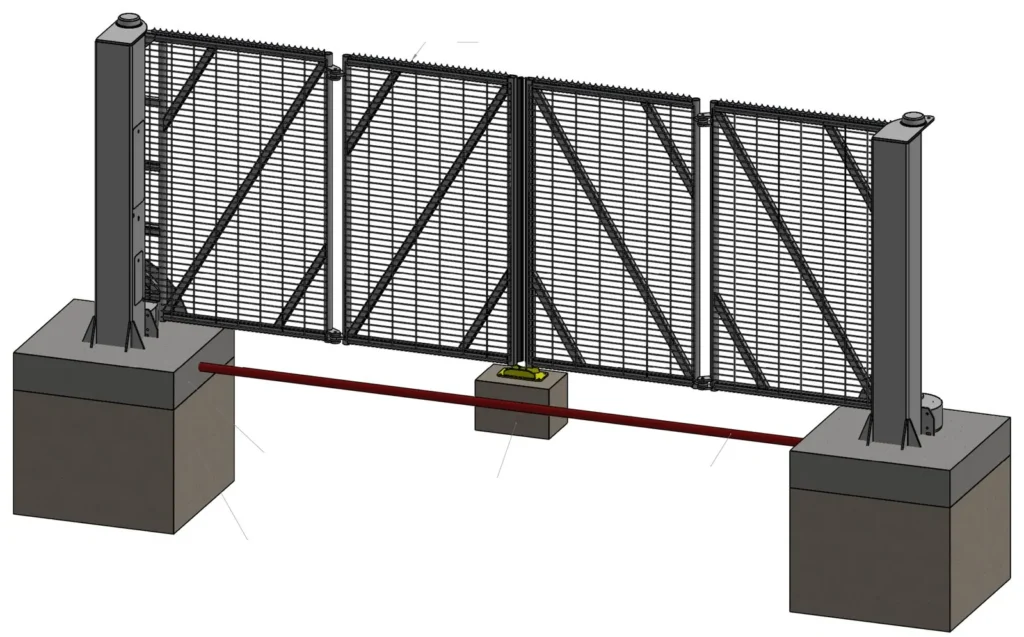
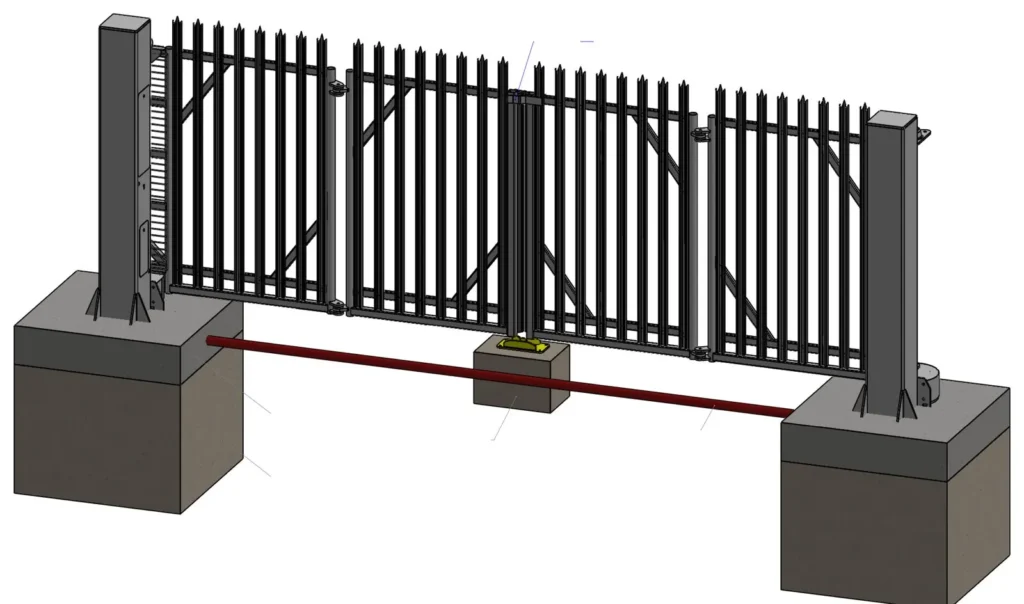
The leaves are steel, galvanised or zinc plated, and can take a wide range of infills, so the gate looks like part of the fence rather than an add-on. Choose an infill to see it on the drawing.
- Vertical tube, mesh and palisade to match the fencing you already have.
- Timber and louvre infills where you need screening.
- Any RAL colour, from site yellow to black.
Safety devices fitted as standard
Dual height photocells
Two beams across the opening, live while the gate is opening and while it's closing.
Four category 3 safety edges
On the leading edges of the leaves, so the gate stops and reverses if it touches anything.
An advanced control panel
Runs the gates safely and smoothly, and makes airlock arrangements with a second gate a straightforward set-up rather than a specialist job.
Fire alarm input
Ready configured, so the gate responds to the fire alarm the way your site needs it to.
Manual release
The leaves can be moved by hand if the power is off.
Works with your access control
Fobs, keypads, intercoms, readers and loops all connect to it. Gate access control.
Optional extras: anti-climb spikes, razor wire extensions, an electric fence topping, traffic lights and a warning siren.
The numbers
Every gate is made to order, so these are the limits. We'll confirm the figures for your entrance at the survey.
| Clear opening | Up to 10m drive-through |
|---|---|
| Height | 2.4m on openings up to 10m, or 3m on openings up to 6m |
| Opening time | 3 to 8 seconds, depending on size and infill |
| Duty cycle | 100%, heavy industrial, indoors or outdoors |
| Construction | Steel gate leaves and towers; every component galvanised or zinc plated |
| Weight | About 595kg, depending on size and infill |
| Power | 230V single phase, 50Hz, 10 amps to each tower |
| Drive | Integrated three phase motor and gearbox inside each tower |
| Safety | Dual height photocells and four category 3 safety edges |
| Ground clearance | 100mm under the leaves |
| Colour | Any RAL colour |
Plug and play: level it, line it, connect it
Free site survey and drawings
We measure the entrance, check the ground, the power and the space behind the gate, and you get detailed layout drawings for the groundworks.
Foundations, poured early
A foundation under each tower, flat and level with each other, in C40 concrete. The first pour goes in at least seven days before the gates arrive, with a duct of at least 50mm linking the towers and a draw cable left in it.
Delivered assembled
The gates arrive ready built. We set the towers on their foundations, level and line them, and fix them down.
Commissioned and tested
We connect the mains and the access control, set the photocells and safety edges, and test the closing forces. We commission every automated gate to BS EN 12453 and hand over the paperwork.
Looked after
Planned maintenance or a call when you need us. Gate servicing and repairs.
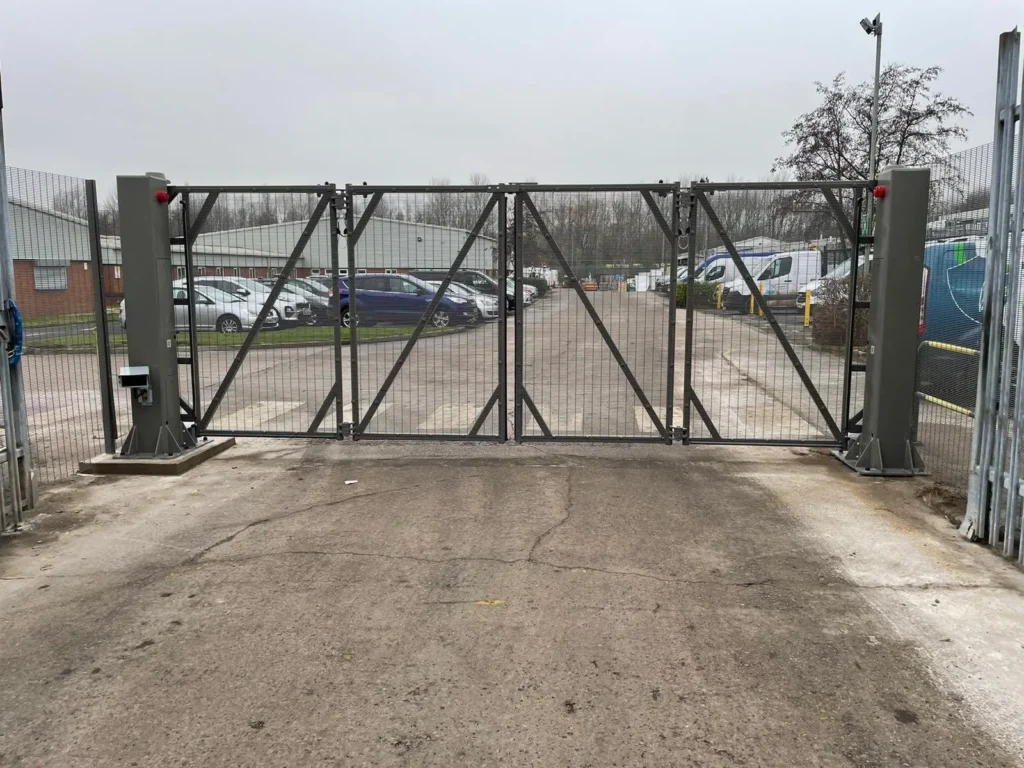
Bi-folding gates in different infills and colours
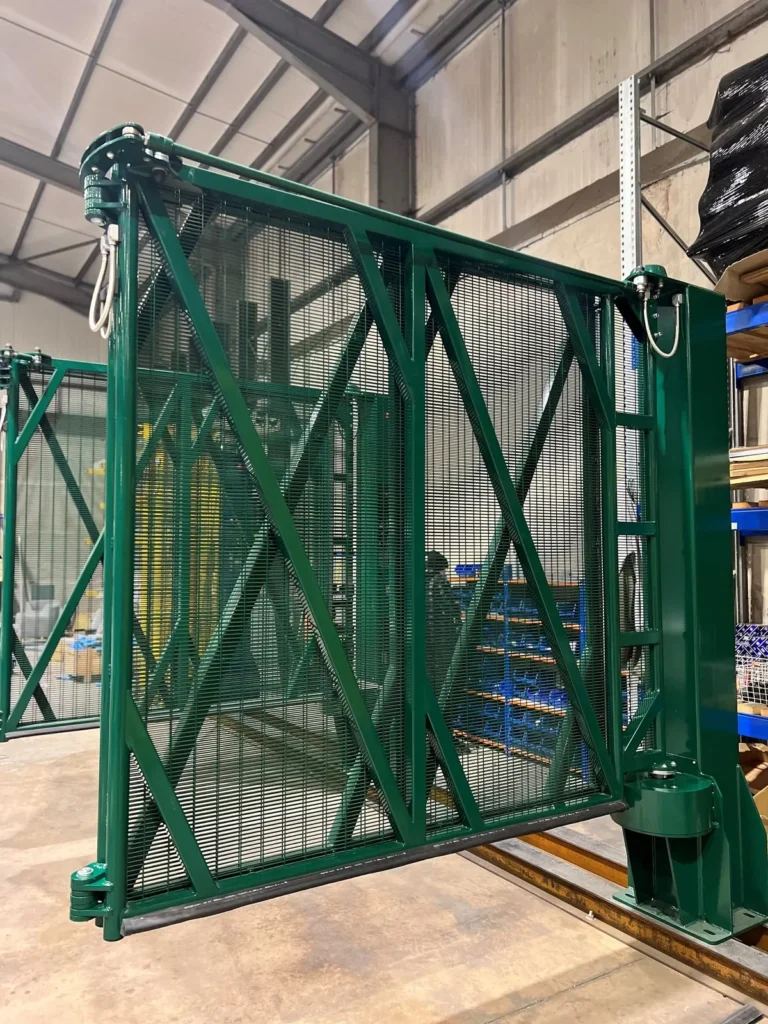
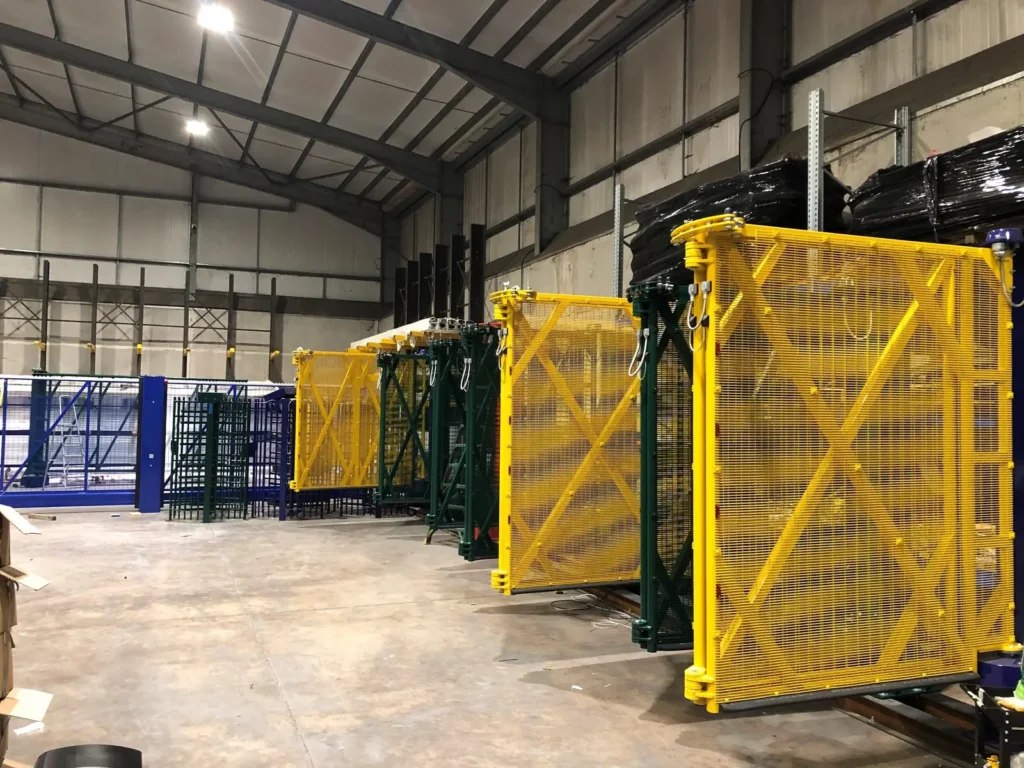
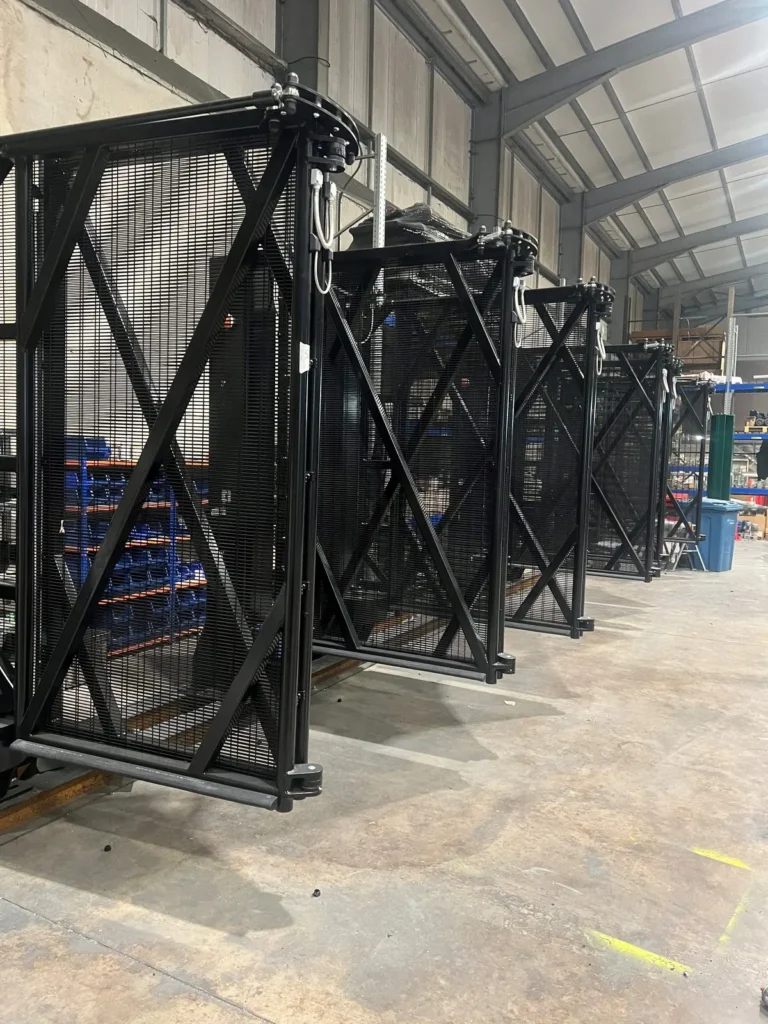
Product photographs and drawings of the range we supply, install and maintain.
Common questions
How fast does a bi-folding speed gate open?
Typically in 3 to 8 seconds, depending on the size of the gate and the infill. That's usually more than twice as fast as a swing gate of the same size, which is why they're chosen for busy entrances where a queue would otherwise build.
How much space does a bi-folding gate need behind it?
About 40% less than a pair of swing gates of the same width, because each leaf folds in half as it opens and tucks in beside its tower. We check the space behind the gate at the survey.
Do bi-folding speed gates run on a track?
No. They're trackless: the leaves hang from the towers with a small clearance above the ground, and a catch shoe in the middle of the opening holds them when they're closed. There's nothing across the road to fill with grit or ice.
What groundworks do bi-folding gates need?
A concrete foundation under each tower, flat and level with each other, poured at least seven days before installation, a small foundation for the catch shoe, and a duct linking the two towers for the cabling. Each tower needs its own 230V, 10 amp supply. We provide the layout drawings for all of it.